
Is GLP-1 a peptide or a hormone?
GLP-1 is both. It is a peptide hormone: a short chain of amino acids that acts as a chemical messenger. The two words answer different questions. Peptide describes what a molecule is made of: amino acids linked in a chain, usually up to about 50 of them (see What Are Peptides?). Hormone describes what it does: it is released by one tissue, travels in the blood and changes the behaviour of cells elsewhere.
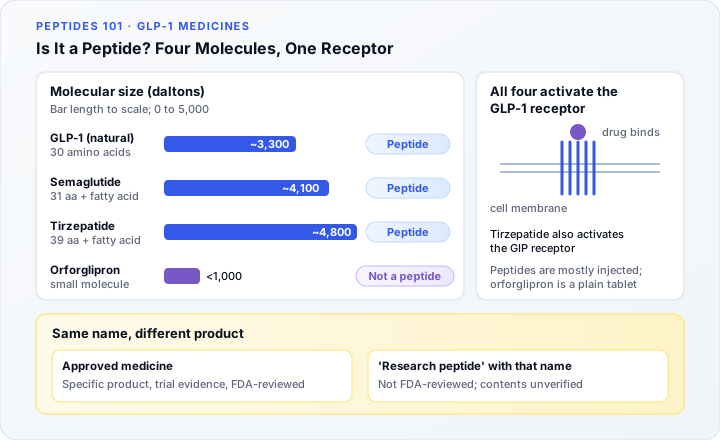
Glucagon-like peptide-1 is made by L cells in the lining of the lower small intestine and colon. It is cut from a larger precursor protein, proglucagon, which in the pancreas also gives rise to glucagon [1]. In 1987, researchers showed that a 31-amino-acid form, GLP-1(7-37), was a potent stimulator of insulin release, while a longer 37-amino-acid form had no such effect [2]. The main active forms in human blood are 30 or 31 amino acids long, comfortably within the usual size range for a peptide [1].
Size is the main thing that separates peptides from proteins, and the boundary is a convention rather than a sharp line. Insulin, with 51 amino acids in two linked chains, is usually called a peptide hormone but is sometimes described as a small protein. GLP-1, at about 30 amino acids, sits clearly on the peptide side. The distinction is explained in Peptides vs Proteins.
GLP-1 acts on the GLP-1 receptor, which sits on the surface of cells in the pancreas, the gut, the brain and other organs [1]. Its role in insulin release after meals is explained in The Incretin Effect, and how drugs that copy it affect appetite is covered in How GLP-1 Drugs Work.