
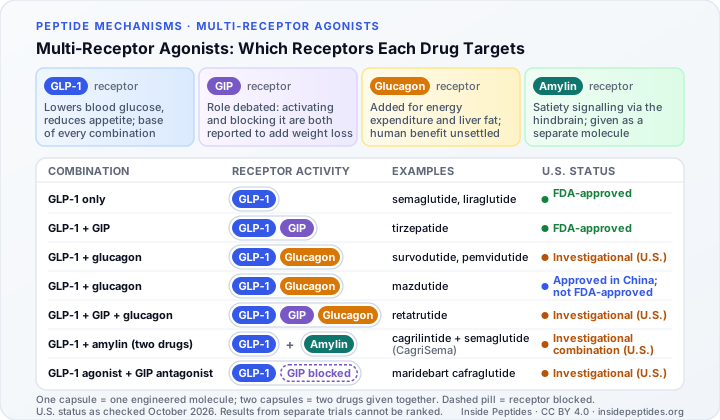
1. Why target more than one receptor?
A multi-receptor agonist is a single medicine designed to switch on more than one type of hormone receptor. The starting point is the GLP-1 receptor agonists, such as semaglutide, which lower blood glucose and reduce appetite. After a meal, however, the body releases a mix of hormones, not just GLP-1, and each acts on different tissues. The idea behind multi-receptor drugs is that activating several of these pathways at once may add benefits, or allow a similar benefit with fewer side effects, than pushing a single pathway harder.
This is chemically feasible because GLP-1, GIP and glucagon are related peptides with similar sequences, and their receptors belong to the same receptor family. By swapping selected amino acids, chemists can make one peptide that is recognised by two or three of these receptors, with the balance of activity at each one tuned during design. How peptide hormones activate receptors is explained in Peptide Receptors, and the physiology of GLP-1 and GIP in The Incretin Effect.
The candidate partner hormones each have a different rationale: GIP is the second incretin hormone; glucagon acts strongly on the liver and on energy use; amylin signals fullness to the brain. Each is discussed below, with the human evidence kept separate from animal and mechanistic data.
2. GLP-1 plus GIP: tirzepatide
Tirzepatide is a single peptide that activates both the GIP and GLP-1 receptors. It is the only multi-receptor agonist approved by the U.S. Food and Drug Administration (FDA): for type 2 diabetes in May 2022 (as Mounjaro) and for chronic weight management in November 2023 (as Zepbound) [1]. The full list of U.S. approvals is kept in the GLP-1 drug comparison tool.
In SURMOUNT-1, a 72-week phase 3 trial of 2,539 adults with obesity, or overweight with a weight-related condition, and without diabetes, average weight change was −15.0%, −19.5% and −20.9% across the three tirzepatide treatment groups, compared with −3.1% with placebo. Gastrointestinal side effects were the most common adverse events [2].
What the GIP component contributes is less clear than the trial results. GIP loses much of its insulin-releasing action in type 2 diabetes, which is why early drug development focused on GLP-1. A 2026 review concluded that tirzepatide has shown the efficacy of combined GIP and GLP-1 receptor activation, but that the efficacy of such multi-receptor agents cannot be attributed simply to the GIP component [3].
3. The GIP paradox: agonists and antagonists
If activating the GIP receptor helps tirzepatide, it would seem to follow that blocking the receptor should hinder weight loss. The evidence so far does not fit that simple picture. In animal studies, both long-acting GIP receptor agonists and GIP receptor antagonists (molecules that block the receptor) have lowered body weight, and both have increased the weight loss produced by GLP-1 receptor agonists [3].
The antagonist approach has now reached human trials. Maridebart cafraglutide (MariTide) is a long-acting antibody–peptide conjugate that activates the GLP-1 receptor while blocking the GIP receptor. In a 52-week phase 2 trial in 465 adults with obesity, average weight change ranged from −12.3% to −16.2% across the treatment groups, compared with −2.5% with placebo; gastrointestinal adverse events were common [4]. It remains investigational.
Rodent studies suggest the two approaches may work through different brain circuits: long-acting GIP receptor agonism appears to involve inhibitory (GABA-releasing) neurons and circuits linked to the area postrema in the hindbrain, whereas the added effect of antagonism in some combination models depends on intact GLP-1 receptor signalling and GIP receptor networks in the hypothalamus. These mechanisms remain incompletely validated in humans [3]. No published trial has directly compared a GIP agonist combination with a GIP antagonist combination, so it is not known which strategy is better, or whether the answer differs between people.
4. GLP-1 plus glucagon: survodutide, mazdutide, pemvidutide
Adding glucagon looks counter-intuitive, because glucagon's best-known job is to raise blood glucose by releasing it from the liver. The interest comes from glucagon's other actions. In a small randomised crossover study of 10 overweight or obese volunteers without diabetes, a glucagon infusion increased resting energy expenditure (the calories the body burns at rest), while GLP-1 alone did not; when GLP-1 was given with glucagon, it offset the rise in blood glucose that glucagon caused [5]. That study lasted hours, not months, so it shows a mechanism rather than a lasting clinical effect. The liver, where glucagon receptors are concentrated, is the other target: dual agonism has been proposed to treat fatty liver disease more effectively than GLP-1 activity alone [6].
- Survodutide: in a 48-week phase 2 trial in 293 adults with biopsy-confirmed MASH (metabolic dysfunction-associated steatohepatitis, an inflammatory form of fatty liver disease) and fibrosis, MASH improved without worsening of fibrosis in 43% to 62% of participants across survodutide groups, compared with 14% with placebo [6]. In the phase 3 SYNCHRONIZE-1 trial of 725 adults with obesity without diabetes, average weight change at 76 weeks was −12.2% and −13.0% in the two survodutide groups, compared with −5.4% with placebo; gastrointestinal adverse events affected 80.9% and 89.7% of the survodutide groups and 47.9% of the placebo group [7]. It is investigational.
- Mazdutide: in the phase 3 GLORY-1 trial of 610 Chinese adults with overweight or obesity, average weight change at 48 weeks was −11.0% and −14.0% in the two mazdutide groups, compared with +0.3% with placebo [8]. Its developer, Innovent, announced approval by China's National Medical Products Administration for chronic weight management in June 2025 [9]. It is not approved in the United States.
- Pemvidutide is being developed mainly for MASH. It is not FDA-approved, and as of Inside Peptides' October 2026 check no obesity trial of pemvidutide had been published in PubMed.
Whether the glucagon component adds weight loss or liver benefit beyond what the accompanying weight loss alone would produce has not been settled in human trials.
5. Three receptors: retatrutide
Retatrutide is a single peptide that activates the GIP, GLP-1 and glucagon receptors. In the phase 3 TRIUMPH-1 trial, published in September 2026, 2,339 adults with obesity without diabetes were randomised to one of three retatrutide treatment groups or placebo for 80 weeks. Average weight change was −17.6%, −23.7% and −25.0% in the three retatrutide groups, compared with −3.9% with placebo. The trial also reported less knee pain in participants with knee osteoarthritis and fewer breathing interruptions during sleep in participants with obstructive sleep apnea, compared with placebo. The most common adverse events were gastrointestinal [10].
Retatrutide is not FDA-approved. Its design adds glucagon receptor activity to the GIP and GLP-1 combination used in tirzepatide, but the trial tested the whole molecule against placebo, so it cannot show how much each of the three receptor activities contributed.
6. Adding amylin: cagrilintide and CagriSema
Amylin is released together with insulin by the beta cells of the pancreas after a meal. Its best-studied effect on eating is to promote satiation, ending a meal sooner. That effect is rapid and appears to be mediated mainly by direct action on the brain, with the area postrema, a region of the hindbrain that can sense hormones circulating in the blood, playing a key role [11]. An older amylin analogue, pramlintide, is approved in the U.S. for diabetes, but it is short-acting.
Cagrilintide is a long-acting amylin analogue. Unlike the dual and triple agonists above, it is not engineered into the same molecule as a GLP-1 receptor agonist; instead it is given together with semaglutide, a combination known as CagriSema. In the phase 3a REDEFINE 1 trial, 3,417 adults with obesity, or overweight with a related condition, and without diabetes were randomised for 68 weeks. Average weight change was −20.4% with cagrilintide plus semaglutide, compared with −3.0% with placebo. Gastrointestinal adverse events affected 79.6% of the combination group and 39.9% of the placebo group [12]. The trial also included smaller groups receiving each drug alone, but its primary comparisons were against placebo [12].
Neither cagrilintide alone nor CagriSema is FDA-approved; semaglutide is separately approved in other products. For a direct comparison of the two amylin analogues, see Cagrilintide vs Pramlintide.
7. Approval status and what remains unproven
| Medicine | Receptor activity | U.S. status (October 2026) |
|---|---|---|
| Tirzepatide | GLP-1 + GIP agonist | FDA-approved (type 2 diabetes; weight management; other indications) |
| Survodutide | GLP-1 + glucagon agonist | Investigational |
| Mazdutide | GLP-1 + glucagon agonist | Not FDA-approved; approved in China |
| Pemvidutide | GLP-1 + glucagon agonist | Investigational |
| Retatrutide | GLP-1 + GIP + glucagon agonist | Investigational |
| Cagrilintide + semaglutide (CagriSema) | Amylin agonist given with a GLP-1 agonist | Investigational combination |
| Maridebart cafraglutide | GLP-1 agonist + GIP antagonist | Investigational |
Status reflects Inside Peptides' check of FDA records on 11 October 2026; see each peptide profile for sources. What "investigational" means is explained in Investigational vs Experimental, and what approval covers in What FDA Approval Means.
Several important questions remain open:
- Contribution of each receptor. Most trials compare the whole drug with placebo. They show that the drug works, not why, and rarely isolate the effect of the GIP, glucagon or amylin component in people [3].
- Comparisons between drugs. Placebo-group weight change ranged from +0.3% in GLORY-1 to −5.4% in SYNCHRONIZE-1 [8] [7], a reminder that trial populations and settings differ. Ranking drugs by headline percentages from separate trials is not reliable; see How Clinical Trials Work.
- Long-term outcomes. Trials of the newer agents mostly report weight, blood glucose and liver measures over one to two years. Effects on heart attacks, strokes, kidney disease or death, and on body composition, have not been established for most of them.
- What happens after stopping. These trials were not designed to show whether weight lost is maintained after treatment ends.
- Safety at scale. Gastrointestinal effects are common across all of these drugs. Rarer harms may only become visible after larger and longer use.
Core Scientific Definitions
Precise biomedical definitions for terms used throughout this guide.
- Multi-receptor agonist
- A drug designed to activate two or more different hormone receptors; a dual agonist activates two (for example GLP-1 and GIP receptors) and a triple agonist activates three (for example GLP-1, GIP and glucagon receptors).
- Unimolecular co-agonist
- A single engineered molecule, usually a peptide, that activates more than one receptor, as opposed to a combination of two separate drugs given together.
- Receptor antagonist
- A molecule that binds a receptor and blocks its activation by the natural hormone, rather than switching the receptor on.
- Amylin
- A peptide hormone released together with insulin by pancreatic beta cells after meals that promotes satiation, acting mainly in the hindbrain.
- Treatment-regimen (treatment-policy) estimand
- A way of analysing a trial that counts every randomised participant's result regardless of whether they stopped the drug early, giving a more conservative estimate than analysing only people who kept taking it.
Peer-Reviewed References & Primary Sources
This educational guide is built strictly upon peer-reviewed literature, official regulatory guidance, and authoritative biochemical repositories.
-
Zepbound (tirzepatide) injection: NDA 217806 approval letter U.S. Food and Drug Administration (Drugs@FDA) · 2023
-
Tirzepatide Once Weekly for the Treatment of Obesity N Engl J Med · 2022
-
Bidirectional pharmacology of GIP receptor targeting in obesity: Historical foundations, mechanistic divergence, and translational boundaries Peptides · 2026
-
Once-Monthly Maridebart Cafraglutide for the Treatment of Obesity - A Phase 2 Trial N Engl J Med · 2025
-
Coadministration of glucagon-like peptide-1 during glucagon infusion in humans results in increased energy expenditure and amelioration of hyperglycemia Diabetes · 2013
-
A Phase 2 Randomized Trial of Survodutide in MASH and Fibrosis N Engl J Med · 2024
-
Survodutide Once Weekly for the Treatment of Adults with Obesity N Engl J Med · 2026
-
Once-Weekly Mazdutide in Chinese Adults with Obesity or Overweight N Engl J Med · 2025
-
Innovent Announces Mazdutide, First Dual GCG/GLP-1 Receptor Agonist, Received Approval from China's NMPA for Chronic Weight Management Innovent Biologics (company announcement) · 2025
-
Retatrutide, a Triple Hormone Receptor Agonist, for Treatment of Obesity N Engl J Med · 2026
-
Role of amylin in feeding and satiation Neuropharmacology · 2025
-
Coadministered Cagrilintide and Semaglutide in Adults with Overweight or Obesity N Engl J Med · 2025
Educational Disclaimer: This guide is produced strictly for biomedical educational purposes and does not constitute medical advice, diagnosis, or treatment recommendations. Experimental peptides discussed herein may lack regulatory authorization for human clinical use. Consult a licensed medical practitioner before considering any therapeutic intervention.