
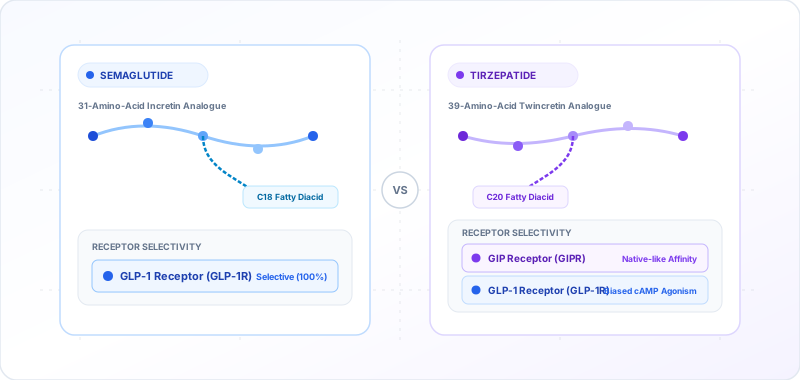
Evidence-Based Summary
Direct randomized studies favor tirzepatide for average HbA1c reduction versus injectable semaglutide 1 mg in adults with type 2 diabetes (SURPASS-2, 2021), and for average weight reduction versus maximum-tolerated injectable semaglutide in adults with obesity without diabetes (SURMOUNT-5, 2025). These findings answer different questions and do not establish superiority for cardiovascular events, kidney outcomes, every formulation or every patient. SURPASS-CVOT was published in 2025: it compared tirzepatide with dulaglutide, not semaglutide.
Quick Comparison: Semaglutide vs Tirzepatide
A high-level comparison of molecule class, molecular receptor targets, FDA regulatory approvals, and verified clinical programs.
| Feature | Semaglutide | Tirzepatide |
|---|---|---|
| Receptor targets | GLP-1 receptor: a cell-surface receiver for an incretin signal | GIP and GLP-1 receptors: two incretin signal receivers |
| Direct glucose comparison | SURPASS-2: injectable semaglutide 1 mg; type 2 diabetes on metformin | SURPASS-2: three tirzepatide regimens; 40 weeks |
| Direct weight comparison | SURMOUNT-5: maximum-tolerated injectable semaglutide; no diabetes | SURMOUNT-5: maximum-tolerated tirzepatide; 72 weeks |
| Cardiovascular comparator | SELECT: placebo, established cardiovascular disease without diabetes | SURPASS-CVOT: dulaglutide, type 2 diabetes with atherosclerotic disease |
| Approved formulations and indications | Product-specific injectable and oral semaglutide labels; see current prescribing information below | Mounjaro and Zepbound injectable labels; diabetes, weight and sleep-apnea indications differ by product |
How Semaglutide and Tirzepatide Function at the Receptor Level
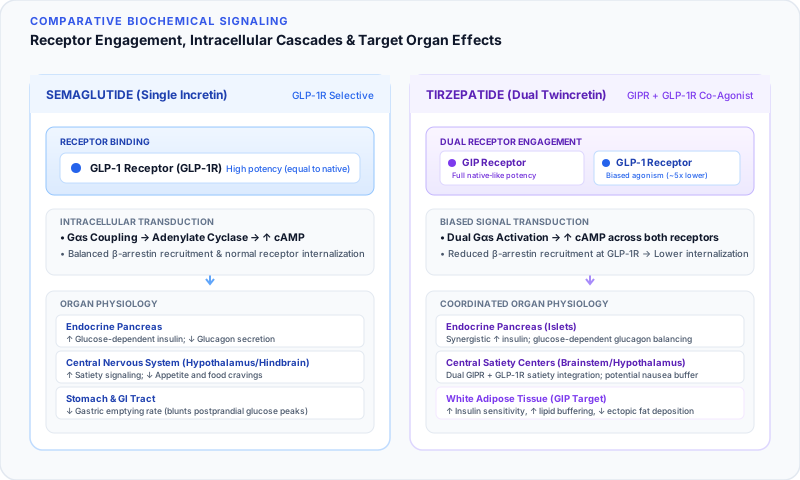
Incretins are hormones that help coordinate insulin release after food. An agonist activates a receptor. Adding a second target does not by itself prove a clinical advantage.
Semaglutide
Primary Target: GLP-1 receptor
Affinity Profile: Selective GLP-1 receptor agonist
Activates GLP-1 signaling, helping glucose-dependent insulin release and reducing food intake. Pharmacology is distinct from evidence for a particular health outcome.
Tirzepatide
Primary Targets: GIP and GLP-1 receptors
Affinity Profile: Dual receptor agonist
Activates both incretin receptors. Human trials test the medicine as a whole; they do not isolate how much of a weight or glucose effect comes from each receptor.
FDA Approvals, Formulations, and Clinical Indications
United States prescribing information checked 10 October 2026. Approved use belongs to the named product, formulation and population, rather than every product containing the same molecule.
Semaglutide Status & Formulations
United States, verified 10 October 2026: Ozempic injection covers type 2 diabetes and specified cardiovascular/kidney risk indications. Oral Rybelsus/Ozempic tablets have their own diabetes and cardiovascular indications. Wegovy injection and tablets cover defined weight and cardiovascular indications; pediatric and MASH indications differ by formulation. Injectable Wegovy’s adult noncirrhotic MASH indication (F2–F3 fibrosis) is accelerated approval with confirmatory requirements. Sharing an ingredient does not make labels interchangeable.
Tirzepatide Status & Formulations
United States, verified 10 October 2026: Mounjaro is indicated for glycemic control in adults and children aged 10 years and older with type 2 diabetes. Zepbound covers defined adult weight-management indications and moderate-to-severe obstructive sleep apnea in adults with obesity. Each label has its own eligibility and limitations; neither brand is a universal treatment for metabolic symptoms.
Critical Regulatory Distinction
Consult the current product labels linked in References. Approval is separate from a research result. Compounded products are not FDA-approved equivalents of approved medicines.
Trial Architecture: SUSTAIN/STEP vs SURPASS/SURMOUNT
HbA1c measures average blood glucose; weight change measures body mass. A cardiovascular composite combines specified events. These endpoints cannot be substituted for one another.
Semaglutide: Clinical Evidence Overview
SELECT randomized 17,604 adults with established cardiovascular disease and overweight or obesity without diabetes. Events occurred in 6.5% versus 8.0% with placebo over mean 39.8-month follow-up (hazard ratio 0.80, 95% CI 0.72–0.90). FLOW randomized 3,533 adults with type 2 diabetes and chronic kidney disease; its kidney/CV-death composite favored semaglutide (HR 0.76, 95% CI 0.66–0.88). Neither compared tirzepatide.
Tirzepatide: Clinical Evidence Overview
SURPASS-CVOT randomized 13,299 participants with type 2 diabetes and atherosclerotic cardiovascular disease; its modified intention-to-treat analysis included 13,165. Events occurred in 12.2% with tirzepatide versus 13.1% with dulaglutide (HR 0.92, 95.3% CI 0.83–1.01). It met noninferiority but not superiority (P=0.09 for superiority). This is not a direct comparison with semaglutide.
Direct Head-to-Head Evidence: The SURPASS-2 Trial
SURPASS-2 and SURMOUNT-5 provide direct randomized evidence, whereas comparing separate STEP and SURMOUNT placebo trials is an indirect comparison. Diabetes status, baseline characteristics, duration, background care and statistical estimand can change results.
SURPASS-2: Phase 3 Active-Comparator Trial (NEJM 2021)
Head-to-Head RCTClinicalTrials.gov: NCT03987919 · Study Design: Open-label, 40-week, parallel-group, multicenter randomized controlled trial.
Participant Population: 1,879 adults with type 2 diabetes on metformin; 40-week follow-up.
Assigned Interventions: Three tirzepatide groups versus injectable semaglutide 1 mg; these trial regimens are context, not prescribing instructions.
Primary Endpoint: Change in glycated hemoglobin (HbA1c) from baseline at week 40.
Direct Head-to-Head Findings
| Outcome Measure | Semaglutide | Tirzepatide | Statistical Significance & Findings |
|---|---|---|---|
| HbA1c change (percentage points, not percent relative change) | -1.86% (Semaglutide 1.0 mg) | -2.01% (Tirzepatide 5 mg); -2.24% (10 mg); -2.30% (15 mg) | All tirzepatide doses met criteria for non-inferiority and statistical superiority over semaglutide 1.0 mg (estimated treatment differences: -0.15% [5 mg], -0.39% [10 mg], -0.45% [15 mg]; p<0.001 for 10 mg and 15 mg). |
| Mean body weight reduction | -5.7 kg | -7.6 kg, -9.3 kg and -11.2 kg across tirzepatide groups | Tirzepatide produced statistically significantly greater mean weight loss across all evaluated doses (differences vs semaglutide: -1.9 kg [5 mg], -3.6 kg [10 mg], -5.5 kg [15 mg]; all p<0.001). |
Safety in SURPASS-2: Phase 3 Active-Comparator Trial (NEJM 2021)
Gastrointestinal adverse events were common in both groups. An open-label trial and a specific comparator regimen cannot establish which medicine is safest for every person.
Essential Methodological Limitations
- Open-label: participants and investigators knew treatment assignment.
- Semaglutide 1 mg injection was the comparator, not all current doses or oral formulations.
- Adults with type 2 diabetes on metformin are not interchangeable with adults without diabetes.
- SURMOUNT-5 was published in 2025: among 751 adults without diabetes, mean weight change at 72 weeks was −20.2% with tirzepatide versus −13.7% with semaglutide. The open-label, maximum-tolerated-regimen result is not evidence of cardiovascular superiority.
Curated Clinical Evidence Table
A curated selection of the primary studies behind each compound’s evidence profile. Results from different studies are not directly comparable.
| Study & Citation | Population | Comparison & Dosing | Duration | Main Endpoint | Key Finding | Methodological Limitations |
|---|---|---|---|---|---|---|
| SURPASS-2 (Frías et al., NEJM 2021) | 1,879 adults with Type 2 diabetes on metformin | Tirzepatide (5, 10, 15 mg) vs Semaglutide 1.0 mg weekly | 40 weeks | Change in HbA1c and body weight | Tirzepatide 15 mg achieved greater HbA1c reduction (-2.30% vs -1.86%) and weight loss (-11.2 kg vs -5.7 kg) than semaglutide 1.0 mg (all p<0.001). | Open-label; semaglutide dose limited to 1.0 mg; T2D population only. |
| STEP 1 (Wilding et al., NEJM 2021) | 1,961 adults with obesity/overweight without diabetes | Semaglutide 2.4 mg weekly vs Placebo (both + lifestyle) | 68 weeks | Percentage change in body weight | Mean body weight reduction of -14.9% with semaglutide 2.4 mg vs -2.4% with placebo. | Placebo-controlled; not an active comparator trial. |
| SURMOUNT-1 (Jastreboff et al., NEJM 2022) | 2,539 adults with obesity/overweight without diabetes | Tirzepatide (5, 10, 15 mg) weekly vs Placebo (+ lifestyle) | 72 weeks | Percentage change in body weight | Mean weight reductions of -15.0% (5 mg), -19.5% (10 mg), and -20.9% (15 mg) vs -3.1% with placebo. | Placebo-controlled; differences across STEP 1 and SURMOUNT-1 cannot be directly cross-compared without head-to-head controls. |
| SELECT (Lincoff et al., NEJM 2023) | 17,604 adults ≥45y with CVD & overweight/obesity without diabetes | Semaglutide 2.4 mg weekly vs Placebo (+ standard of care) | Mean 39.8 months | Time to first 3-point MACE (CV death, nonfatal MI, nonfatal stroke) | 20% relative risk reduction in MACE (HR 0.80, 95% CI 0.72–0.90; p<0.001); led to landmark FDA approval. | Placebo comparison; does not establish superiority over tirzepatide or a class-wide effect. |
| SURMOUNT-5 (Aronne et al., 2025) | 751 adults with obesity without diabetes | Maximum-tolerated tirzepatide versus injectable semaglutide | 72 weeks | Percentage weight change | −20.2% versus −13.7% (P<0.001). | Open-label; weight endpoint, not a cardiovascular-outcomes comparison. |
| SURPASS-CVOT (Nicholls et al., 2025) | 13,299 randomized; 13,165 analyzed, type 2 diabetes and atherosclerotic cardiovascular disease | Tirzepatide versus dulaglutide | Event-driven follow-up | Cardiovascular death, myocardial infarction or stroke | 12.2% versus 13.1%; HR 0.92 (95.3% CI 0.83–1.01). Noninferior, not superior. | Not a semaglutide comparison; active comparator, not placebo. |
Adverse Effects, Boxed Warnings, and Clinical Precautions
Because both semaglutide and tirzepatide stimulate incretin receptors and slow upper gastrointestinal transit, they share broad safety considerations alongside specific drug-interaction nuances.
FDA Boxed Warning: Risk of Thyroid C-Cell Tumors
Both U.S. labels carry a Boxed Warning for Thyroid C-Cell Tumors observed in rodents; whether these medicines cause such tumors in humans is unknown. Both are contraindicated with a personal or family history of medullary thyroid carcinoma or MEN 2. This is a labeling warning, not a measured human cancer incidence.
| Safety Consideration | Semaglutide | Tirzepatide |
|---|---|---|
| Common adverse effects | Gastrointestinal symptoms including nausea, vomiting and diarrhea; frequencies depend on product and trial | Gastrointestinal symptoms including nausea, vomiting and diarrhea; frequencies depend on product and trial |
| Important label warnings | Pancreatitis, gallbladder disease and dehydration-associated kidney injury; see product-specific label | Pancreatitis, gallbladder disease and dehydration-associated kidney injury; see product-specific label |
| Hypoglycemia | Risk can increase with insulin or insulin secretagogues | Risk can increase with insulin or insulin secretagogues |
| Oral contraceptive interaction | See current formulation-specific prescribing information | Label specifies a non-oral contraceptive or additional barrier method after initiation and dose increases |
Specific Drug Interaction Note
Tirzepatide labels advise a non-oral contraceptive method or an additional barrier method for four weeks after initiation and each dose increase because delayed gastric emptying can affect oral contraceptive absorption. This is a drug-interaction warning; individual contraceptive decisions require clinical advice.
What Semaglutide and Tirzepatide Have in Common
Where the two compounds overlap in biology, evidence or regulatory context.
Both have randomized human evidence
Evidence supports defined populations and outcomes, with product-specific indications.
Shared safety considerations
Gastrointestinal effects and the rodent-based thyroid warning appear in both labels.
Key Scientific & Clinical Differences
Meaningful distinctions in mechanism, strength of evidence, safety and regulatory status.
One target versus two
Semaglutide activates GLP-1 receptors; tirzepatide activates GIP and GLP-1 receptors.
Different comparisons answer different questions
SURMOUNT-5 directly compares weight outcomes; SELECT and SURPASS-CVOT have different comparators and populations.
Scientific Comparison vs Clinical Recommendations
Inside Peptides compares scientific evidence, receptor pharmacology, and official regulatory documents to advance public and professional understanding. We do not determine which compound is appropriate for an individual patient, rank medications with arbitrary scores, or recommend initiating or switching treatments.
Decisions about any medicine require a licensed healthcare professional who can weigh personal medical history, contraindications, interactions and monitoring needs. Unapproved peptides have no established safe use, and products sold as “research chemicals” are not the preparations studied in clinical research.
Approved Uses vs Online Claims
A critical scientific distinction between verified, FDA-approved clinical uses and unverified claims circulating on social media and vendor platforms.
Greater average weight loss means fewer heart attacks than semaglutide
Not established by the weight trialUse the primary trials and product-specific labels.
A body-weight endpoint is not a cardiovascular-events endpoint. SELECT and SURPASS-CVOT do not form a randomized semaglutide-versus-tirzepatide comparison.
Evidence Strength Across Clinical Domains
Inside Peptides evaluates scientific certainty at the claim level. Because clinical evidence varies significantly depending on the therapeutic endpoint evaluated, each domain is assessed independently.
Weight in adults without diabetes
Direct SURMOUNT-5 evidence favors tirzepatide on average in its defined 72-week comparison.
Blood glucose in type 2 diabetes
Direct SURPASS-2 evidence compares tirzepatide with semaglutide 1 mg, not every formulation.
Cardiovascular comparison between these two medicines
The trials described here do not directly compare semaglutide and tirzepatide for cardiovascular events.
What Research Still Doesn’t Tell Us
Identifying open scientific questions, pending active-comparator trials, and areas where long-term clinical data remain incomplete.
Individual outcomes
Group averages do not predict an individual response, tolerability or the appropriate prescription.
Direct long-term organ outcomes
A direct weight comparison does not settle comparative cardiovascular or kidney outcomes.
Cross-trial estimates
Different populations, regimens, follow-up and handling of treatment discontinuation limit simple league tables. Both head-to-head trials were funded by Eli Lilly; SELECT and FLOW by Novo Nordisk.
Related Compound Profiles
Individual profiles provide full molecular datasheets, CAS numbers, preclinical histories, and compound monographs.
Related Educational Resources
Scientific & Regulatory References
Every pharmacological mechanism, clinical trial result, and regulatory approval cited on this page is traceable to official FDA prescribing documentation, ClinicalTrials.gov registries, or peer-reviewed medical publications.
-
Randomized controlled trial · Head-to-head
Tirzepatide versus Semaglutide Once Weekly in Patients with Type 2 DiabetesPrimary head-to-head RCT: 1,879 adults with T2D; 40 weeks; evaluated tirzepatide 5, 10, 15 mg vs semaglutide 1.0 mg.
-
Randomized controlled trial · Obesity
Once-Weekly Semaglutide in Adults with Overweight or ObesityKey semaglutide weight-management RCT: 1,961 adults; 68 weeks; semaglutide 2.4 mg vs placebo.
-
Randomized controlled trial · Obesity
Tirzepatide Once Weekly for the Treatment of ObesityKey tirzepatide weight-management RCT: 2,539 adults; 72 weeks; tirzepatide 5, 10, 15 mg vs placebo.
-
Cardiovascular outcomes trial
Semaglutide and Cardiovascular Outcomes in Obesity without Diabetes17,604 participants; 20% relative risk reduction in 3-point MACE; basis of FDA expanded indication for Wegovy.
-
Renal outcomes trial
Effects of Semaglutide on Chronic Kidney Disease in Patients with Type 2 Diabetes3,533 participants; 24% risk reduction in major kidney disease events and CV death; stopped early for efficacy.
-
Preclinical & molecular pharmacology
LY3298176, a novel dual GIP and GLP-1 receptor agonist for the treatment of type 2 diabetes mellitus: From discovery to clinical proof of conceptDefinitive characterization of tirzepatide structure, receptor affinities, and biased GLP-1 intracellular signaling.
-
Randomized withdrawal trial
Effect of Continued Weekly Subcutaneous Semaglutide vs Placebo on Weight Loss Maintenance in Adults With Overweight or Obesity: The STEP 4 Randomized Clinical TrialEvaluated medication continuation versus placebo withdrawal, demonstrating weight regain after cessation.
-
Randomized withdrawal trial
Continued Treatment With Tirzepatide for Maintenance of Weight Reduction in Adults With Obesity: The SURMOUNT-4 Randomized Clinical TrialEvaluated tirzepatide maintenance versus withdrawal, demonstrating substantial weight regain following cessation.
-
Primary randomized trial
Tirzepatide as Compared with Semaglutide for the Treatment of ObesityRead the comparator, population and prespecified endpoint; industry funded.
-
Primary randomized trial
Cardiovascular Outcomes with Tirzepatide versus Dulaglutide in Type 2 DiabetesRead the comparator, population and prespecified endpoint; industry funded.
-
Official prescribing information
Wegovy injection and tablets, current U.S. labelRevised June 2026; checked 10 October 2026.
-
Official prescribing information
Ozempic injection, current U.S. label
-
Official prescribing information
Rybelsus and Ozempic tablets, current U.S. label
-
Official U.S. prescribing information
Zepbound, current labelChecked 10 October 2026.
-
Official U.S. prescribing information
Mounjaro, current labelChecked 10 October 2026; includes pediatric type 2 diabetes indication from age 10.