
Critical safety, purity, and regulatory realities.

Therapeutic peptides bridge life-saving pharmaceutical medicines and unregulated experimental chemicals. Inside Peptides provides objective, evidence-first analysis of manufacturing quality, laboratory analytical testing, legal frameworks, and biological safety risks.

10 educational guides · Quality, regulation, and research risks

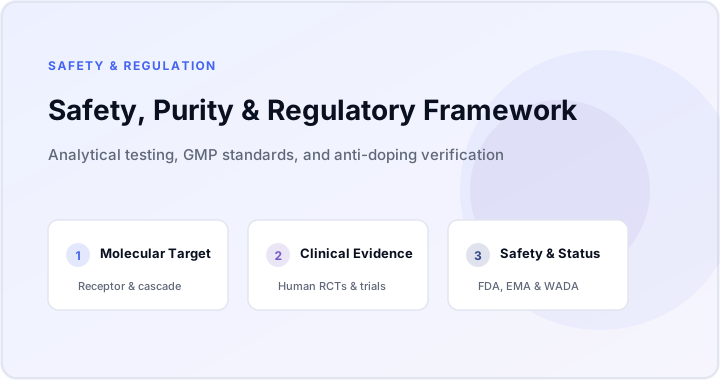
Illustration of peptide quality frameworks, pharmaceutical cGMP vs research-grade synthesis, and regulatory compliance tiers.
Safety Pillars

Core Dimensions of Peptide Safety

Use these four perspectives to understand the safety questions around a specific product, research context, and intended use.

01

Manufacturing & Purity

Understand the difference between pharmaceutical cGMP synthesis and unregulated laboratory-grade compounds, including Net Peptide Content and trifluoroacetate (TFA) salts.

02

Analytical Testing & CoAs

How to critically interpret Certificates of Analysis (CoAs), HPLC chromatograms, mass spectrometry reports, and bacterial endotoxin testing.

03

Regulatory & Legal Status

FDA 503A and 503B compounding rules, FDA’s Category 2 safety-risk list for bulk substances, and the legal fiction of 'Research Use Only' labeling.

04

Athletic & Anti-Doping Rules

Analysis of WADA Section S2 (Peptide Hormones) and Section S0 (Non-Approved Substances), detection windows, and athlete health hazards.

Guides & Regulatory Reviews

Explore All Safety & Quality Guides

Guides to manufacturing standards, laboratory testing, chemical purity, and athletic anti-doping regulations.

Regulatory Framework 12 min read

Compounded Peptides

Compounding pharmacies play a vital role in medical care by preparing customized medications for individual patient needs. However, the use of bulk peptide substances in compounding has sparked intense regulatory scrutiny, leading to federal prohibitions on dozens of popular research peptides.

Chemical Quality & Testing 10 min read

Peptide Purity

Vendors frequently boast of selling '99%+ pure' peptides, leading consumers to believe their vials contain pure, unadulterated therapeutic molecules. In peptide chemistry, 'purity' has a highly technical definition that does not correspond to physical mass composition.

Chemical Quality & Testing 11 min read

Peptide Impurities

Chemical synthesis of peptides is an extraordinary multi-step process involving dozens of sequential chemical reactions. Inevitably, incomplete couplings, side reactions, and residual cleavage reagents introduce complex impurity profiles that require rigorous identification and purification.

Chemical Quality & Testing 12 min read

Peptide Testing

Verifying the identity, purity, and safety of a peptide requires an integrated battery of analytical chemistry and microbiological assays. No single test is sufficient on its own to confirm that a substance is genuine and suitable for research or therapy.

Biological Safety & Risks 12 min read

Immunogenicity

Because peptides are biological macromolecules, the human immune system can recognize them as foreign antigens. The development of anti-drug antibodies (ADAs) is one of the most critical safety and efficacy concerns in peptide drug development.

Athletic & Anti-Doping 11 min read

Peptides & Athletes

Peptides are extensively discussed in athletic, bodybuilding, and endurance communities for perceived recovery, muscle accretion, and fat-loss benefits. However, competitive athletes face severe anti-doping sanctions, and non-tested fitness enthusiasts expose themselves to significant physiological risks.

Athletic & Anti-Doping 12 min read

WADA Peptide Rules

The World Anti-Doping Agency (WADA) maintains strict, globally harmonized standards prohibiting performance-enhancing and recovery peptides in competitive sport. Understanding how the Prohibited List categorizes peptides is critical for competitive athletes, sports physicians, and scientific researchers.

Further reading on safety

Inside Peptides Safety Mission

Independent Evidence, Zero Vendor Affiliation

Inside Peptides does not sell peptides, accept advertising from chemical vendors, or endorse compounding clinics. Our safety evaluations are grounded in FDA, EMA, USP, and WADA regulatory public records and peer-reviewed bioanalytical chemistry literature.