
Semaglutide: the basics
What is it?
A prescription medicine that imitates GLP-1, a gut hormone involved in blood-sugar control and appetite.
Research paper ↗What do people claim it helps with?
Better blood-sugar control and weight management have clinical support in appropriate patients. Broader wellness and anti-aging claims need separate evidence.
What has research actually shown?
Large human trials found improved blood-sugar control and substantial average weight loss in defined patient groups. Outcomes differ between people and depend on the product, treatment and condition.
Research paper ↗Has this been demonstrated in people?
Demonstrated in people, including controlled clinical trials for the uses described here. Evidence for one diagnosis does not establish benefit for every other claim.
Research paper ↗What side effects, risks and unknowns should I understand?
Nausea, vomiting, diarrhea or constipation are common. Important concerns include pancreatitis, gallbladder problems and dehydration. Certain products carry a thyroid-tumor warning and are contraindicated with personal or family medullary thyroid cancer or MEN2, an inherited endocrine disorder. The thyroid warning is based on animal findings; the human risk is uncertain.
Prescribing information ↗Is it an approved medicine?
Yes. FDA-approved products include Ozempic and Rybelsus for type 2 diabetes and Wegovy for weight management, with additional product-specific indications. A generic peptide listing is not an approved product.
Prescribing information ↗Approval here means U.S. FDA approval and applies to a particular product, formulation and use. This is a starting overview, not a complete side-effect list. Sources checked 10 October 2026; independent scientific review pending.
How is it used or studied?
Prescription injection or tablet, depending on the product. The formulations and indications differ.
Different routes and formulations can have different effects. A study of one product does not validate every product with the same peptide name.
A common misunderstanding
Native GLP-1, semaglutide and other GLP-1 medicines are not interchangeable.
What should I ask a clinician?
- What diagnosis or goal are we trying to address, and what established options are available?
- Was the expected benefit shown in people like me, using this exact product?
- How could my medicines, health conditions or pregnancy plans affect the risks?
- What monitoring is needed, and what would tell us the treatment is helping or should be stopped?
What do the research words mean?
- Peptide
- A short chain of amino acids, the building blocks of proteins.
- Preclinical
- Research in cells, tissues or animals before dependable treatment evidence in people.
- Controlled trial
- A study comparing a treatment with another treatment or a placebo to help separate its effects from other explanations.
- Biomarker
- A measurement, such as a hormone level. A change does not necessarily mean someone feels better or lives longer.
Semaglutide Research: Mechanism, Trial Results and Limitations
Established Clinical Trials
STEP 1 studied weight outcomes in adults without diabetes; SELECT studied cardiovascular events in people with established cardiovascular disease; FLOW studied kidney and cardiovascular outcomes in type 2 diabetes with chronic kidney disease. These are different questions, not interchangeable measures of effectiveness.
Laboratory & In Vivo Assays
Receptor and laboratory studies help explain biological action. They do not replace clinical outcomes, and an appetite mechanism does not guarantee a particular amount of weight loss for an individual.
What is Semaglutide?
Semaglutide (Ozempic / Wegovy / Rybelsus) is Semaglutide activates the GLP-1 receptor, a cell signal involved in insulin release and appetite. Randomized trials support benefits in defined populations; results and approved uses depend on the product, formulation and condition. Aliases include: Ozempic, Wegovy, Rybelsus, NN9535.
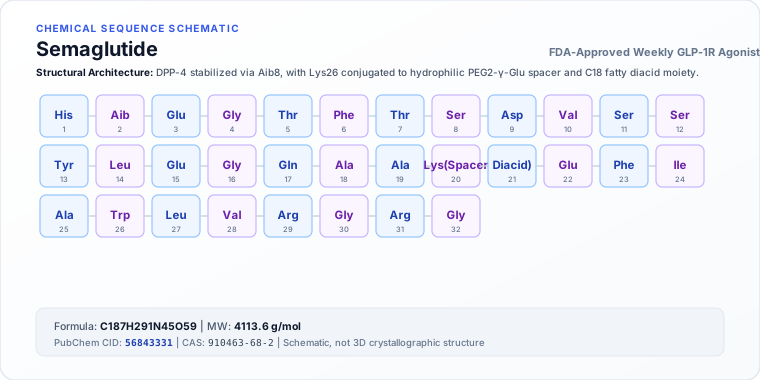
- Sequence (one-letter)
- H-Aib-EGTFTSDVSSYLEGQAAK(diacid)EFIAWLVRGRG
- Molecular formula
- C187H291N45O59
- Molecular weight
- 4113.6 g/mol
- CAS Number
- 910463-68-2
- UNII Code
- 53AXN4NNHX
- PubChem CID
- 56843331
Identifiers checked against PubChem and FDA's Global Substance Registration System on 13 October 2026. FDA substance record ↗ · PubChem record ↗ See all names and codes in the peptide name index.
Clinical Trials & Human Cohorts
Human research can examine tolerability, symptoms or patient outcomes. The design and comparator determine what each result can establish.
Once-Weekly Semaglutide in Adults with Overweight or Obesity [1]
What was reported
Mean weight change: −14.9% with studied injectable semaglutide versus −2.4% with placebo. Model-estimated difference: −12.4 percentage points (95% CI −13.4 to −11.5).
What limits the conclusion
Group averages are not individual guarantees. This formulation and population cannot establish effects for every semaglutide product or people with diabetes. Gastrointestinal-event discontinuation: 4.5% vs 0.8%.
Semaglutide and Cardiovascular Outcomes in Obesity without Diabetes [2]
What was reported
Primary composite events: 569/8,803 (6.5%) vs 701/8,801 (8.0%). Hazard ratio 0.80 (95% CI 0.72–0.90); rounded absolute difference 1.5 percentage points.
What limits the conclusion
A 20% relative hazard reduction is not 20 fewer events per 100 people. Adverse-event permanent discontinuation: 16.6% vs 8.2%. This was not a trial of cardiovascular prevention in everyone without established disease.
Effects of Semaglutide on Chronic Kidney Disease in Patients with Type 2 Diabetes [3]
What was reported
First primary-outcome events: 331 vs 410; hazard ratio 0.76 (95% CI 0.66–0.88). The composite included major kidney outcomes or death from kidney or cardiovascular causes.
What limits the conclusion
Composite components and absolute event rates matter; the result is not proof that every kidney disease or every participant benefits. Early stopping and the selected clinical population limit extrapolation.
How the compound may work
Mechanisms describe how Semaglutide may affect biological processes. Laboratory findings and patient outcomes answer different questions.
What receptor agonist means
An agonist activates a receptor. Semaglutide activates GLP-1 receptors and increases insulin release when glucose is high, reduces glucagon secretion and influences appetite. It also delays gastric emptying (food leaving the stomach). [4]
Areas Being Studied
These research topics reflect active areas of scientific exploration, distinct from unverified commercial marketing claims.
Weight and cardiovascular outcomes
STEP 1 and SELECT have different eligibility criteria and endpoints. Use the outcome-specific evidence rather than a single broad benefit claim. [2]
Kidney outcomes in type 2 diabetes
Clinical evidence concerns type 2 diabetes plus chronic kidney disease; it does not establish a universal kidney treatment. [3]
Compare the study designs.
| Study | Design / sample | Outcome type | Key limitation |
|---|---|---|---|
| STEP 1: body weight · 2021 [1] | Double-blind, placebo-controlled randomized trial; 68 weeks n = 1961 |
Clinical endpoint evaluation | Group averages are not individual guarantees. This formulation and population cannot establish effects for every semaglutide product or people with diabetes. Gastrointestinal-event discontinuation: 4.5% vs 0.8%. |
| SELECT: cardiovascular events · 2023 [2] | Double-blind, placebo-controlled randomized trial n = 17604 |
Clinical endpoint evaluation | A 20% relative hazard reduction is not 20 fewer events per 100 people. Adverse-event permanent discontinuation: 16.6% vs 8.2%. This was not a trial of cardiovascular prevention in everyone without established disease. |
| FLOW: kidney/CV composite · 2024 [3] | Placebo-controlled randomized trial; median follow-up 3.4 years n = 3533 |
Clinical endpoint evaluation | Composite components and absolute event rates matter; the result is not proof that every kidney disease or every participant benefits. Early stopping and the selected clinical population limit extrapolation. |
Regulatory Status & Clinical Safety
Regulatory Classification
United States, verified 10 October 2026: Ozempic injection covers type 2 diabetes and specified cardiovascular/kidney risk indications. Oral Rybelsus/Ozempic tablets have their own diabetes and cardiovascular indications. Wegovy injection and tablets cover defined weight and cardiovascular indications; pediatric and MASH indications differ by formulation. Injectable Wegovy’s adult noncirrhotic MASH indication (F2–F3 fibrosis) is accelerated approval with confirmatory requirements. Sharing an ingredient does not make labels interchangeable. [4][5][6]
Safety Realities & Impurities
Nausea, vomiting and diarrhea are common. Labels also describe pancreatitis, gallbladder disease, dehydration-related kidney injury and other risks. Boxed thyroid warnings arise from rodent findings; relevance to humans is unknown. Products are contraindicated with personal/family medullary thyroid carcinoma or MEN2 and specified hypersensitivity. This summary does not replace the current product label or clinical assessment. [4]
Clinical Trials Registry Records
Official registry records from ClinicalTrials.gov. Study registration does not imply government endorsement or guaranteed efficacy.
SELECT cardiovascular outcomes [7]
- Planned enrollment
- 17604 (actual enrollment)
- Posted results
- Available
- Sponsor
- Novo Nordisk A/S
- Last updated
- 2024-08-30
WADA & Anti-Doping Regulations
WADA Anti-Doping Status
Semaglutide is not prohibited under current World Anti-Doping Agency (WADA) regulations. However, athletes must ensure unregulated preparations or unverified vendor products do not violate Section S0 (Non-approved substances). Last verified: October 2026.
Research Timeline
-
2021
STEP 1 published
A 68-week randomized weight-management trial reports outcomes in adults without diabetes. [1]
-
2023
SELECT published
The study reports cardiovascular events in adults with pre-existing cardiovascular disease. [2]
-
2024
FLOW published
Kidney/CV composite outcomes reported for adults with type 2 diabetes and chronic kidney disease. [3]
What Researchers Still Don't Know
Individual response
Trial averages do not predict precisely how much a particular person will benefit or which adverse effects they will experience.
Different populations and products
Results must be matched to age, condition, formulation, comparator and follow-up. Benefits in one population do not establish another indication.
Longer horizons
Finite-duration randomized studies cannot resolve every rare or delayed effect. Postmarketing surveillance adds different evidence with its own limitations.
References
Primary sources verified against PubMed / NLM and regulatory databases.
-
Phase 3 RCT
Once-weekly semaglutide in adults with overweight or obesity ↗ (external website)
DOI: 10.1056/NEJMoa2032183 ↗ (external website) -
Landmark RCT
Semaglutide and cardiovascular outcomes in obesity without diabetes ↗ (external website)
DOI: 10.1056/NEJMoa2307563 ↗ (external website) - Primary randomized trial DOI: 10.1056/NEJMoa2403347 ↗ (external website)
-
Official prescribing information
Wegovy injection and tablets, current U.S. label ↗ (external website)
Revised June 2026; checked 10 October 2026.
- Official prescribing information
-
Official prescribing information
Rybelsus and Ozempic tablets, current U.S. label ↗ (external website)
-
Official registry
NCT03574597, SELECT ↗ (external website)
Official API record checked 10 October 2026.