

Are collagen peptides peptides?
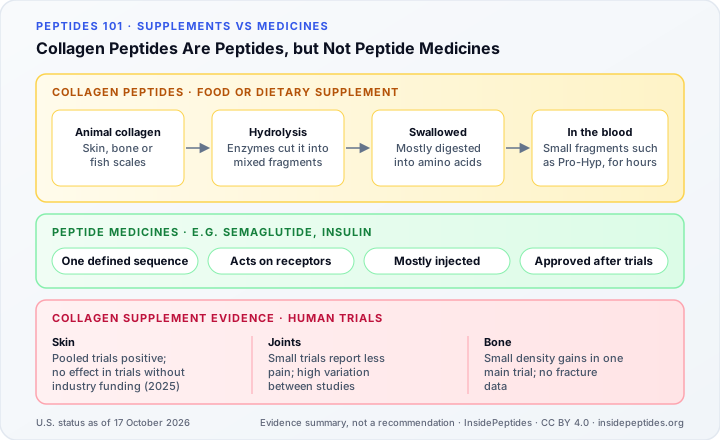
Yes, in the chemical sense: collagen peptides are short fragments of the protein collagen, so they are peptides. But they are a food supplement made by breaking down animal collagen, not a signalling molecule or a medicine, and they have little in common with the peptide drugs and “research peptides” discussed elsewhere on this site.
A peptide is any short chain of amino acids joined by peptide bonds (see What Are Peptides? and Peptides vs Proteins). Collagen is a large structural protein, the main component of skin, tendon, cartilage and bone. When manufacturers break collagen into smaller pieces, the result is sold as “hydrolysed collagen”, “collagen hydrolysate” or “collagen peptides”. All three names describe essentially the same kind of product.
So the honest answer to “peptides vs collagen” is that the question mixes two levels. Collagen peptides are one kind of peptide, defined by where they come from. Peptide medicines such as semaglutide or insulin are defined by what they do: they bind specific receptors and change how the body works. This guide explains what collagen supplements are, what happens to them after they are swallowed, what the trials show for skin, joints and bone, and how they are regulated. It describes research only, gives no amounts or routines, and is not medical advice.