
Why “peptides” has no single safety answer
There is no single answer to whether peptides are safe, because “peptide” describes a chemical structure, not a type of product. A peptide is a short chain of amino acids. The word covers insulin, which millions of people with diabetes rely on; GLP-1 medicines such as semaglutide; bone-building drugs such as teriparatide; ingredients in cosmetic creams; collagen fragments sold as food; and unapproved compounds such as BPC-157 that have never completed a human safety trial. Asking whether “peptides” are safe is a little like asking whether “chemicals” are safe.
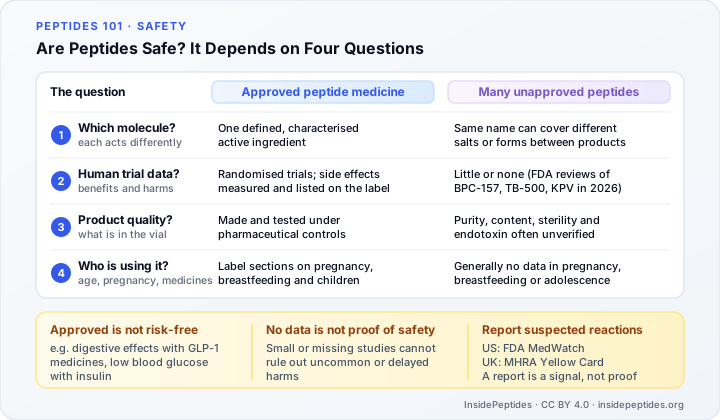
A more useful approach is to ask four separate questions:
- Which molecule? Each peptide acts on its own targets in the body and has its own pattern of wanted and unwanted effects.
- Is it an approved medicine with human trial data? Approval means a regulator has weighed the evidence on benefits and risks for a stated use.
- What is the product quality? The same molecule can be made to pharmaceutical standards or in a poorly controlled process, and that changes the risk.
- Who is using it, and for what? Age, pregnancy, other illnesses and other medicines all change the balance.
Even for approved medicines, “safe” does not mean free of risk. The U.S. Food and Drug Administration (FDA) explains that all medicines have risks as well as benefits, and that when a medicine’s benefits outweigh its known risks, the FDA considers it safe enough to approve [1]. For a fuller explanation, see What FDA Approval Means and Approved vs Unapproved Peptides.