
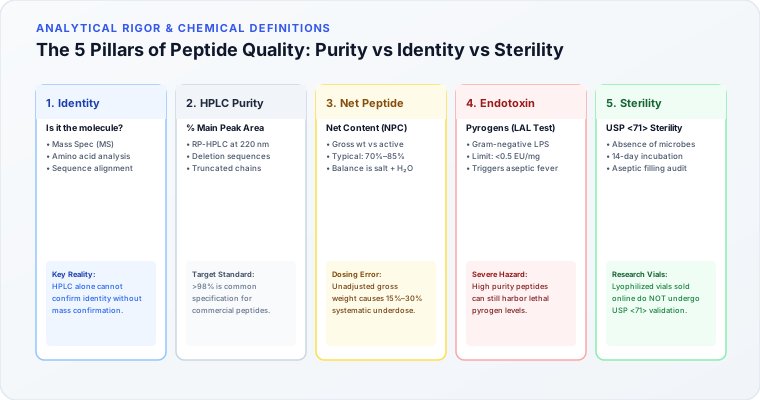
Understanding Chromatographic (HPLC) Purity
When a laboratory reports peptide purity from Reverse-Phase HPLC, it calculates the area under the primary chromatographic peak as a fraction of the total area of all detected peaks:
Purity (%) = [Target Peak Area / Total Integrated Peak Area] × 100
While this metric confirms that the peptide synthesis did not generate significant quantities of closely eluting deletion sequences or diastereomers, it only measures UV-absorbing organic impurities. It is blind to water, salts, non-absorbing reagents, and insoluble aggregates.
Net Peptide Content (NPC) Explained
Every peptide salt powder contains three distinct components:
- Active Peptide Molecule: The actual amino acid chain that binds biological receptors.
- Counter-Ions (Salts): Basic amino acid residues (Lys, Arg, His) and the free N-terminus carry positive charges that must be balanced by negative counter-ions. Because peptides are cleaved from resins using trifluoroacetic acid (TFA), raw peptides exist as TFA salts. TFA often contributes 10% to 20% of the gross weight.
- Hydration Water: Lyophilized peptides are hygroscopic and retain 3% to 10% bound water molecules.
Therefore, a vial containing 10 mg of total powder with 98% HPLC purity might possess a Net Peptide Content of only 75%, meaning it contains only 7.5 mg of true peptide active ingredient.
Clinical and Research Implications
In rigorous scientific experiments and clinical medicine, failing to adjust for Net Peptide Content causes systematic underdosing of 15% to 30%. In contrast, pharmaceutical-grade peptides formulated under pharmacopeial monographs have their dosage calibrated precisely to free base equivalent, ensuring exact therapeutic delivery.
Scientific & Regulatory References
-
Elimination and exchange of trifluoroacetate counter-ion from cationic peptides: a critical evaluation of different approaches
Related Compound Profiles
Regulatory & Health Disclaimer
Inside Peptides provides educational analysis of pharmaceutical standards and biomedical literature. This guide does not constitute medical, legal, or pharmacological advice. Never self-administer unapproved research compounds or alter prescribed treatments without licensed medical oversight.