
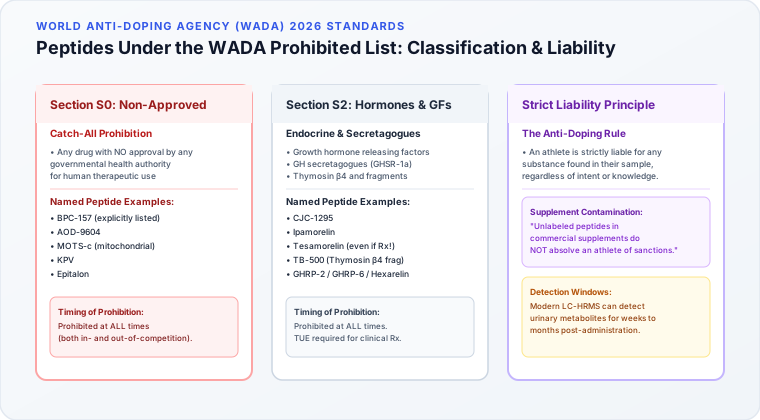
The WADA Prohibited List Architecture
Peptides fall under two primary sections of the WADA International Standard Prohibited List:
- Section S2: Peptide Hormones, Growth Factors, Related Substances, and Mimetics: This category explicitly prohibits growth hormone secretagogues (GHRH analogues such as CJC-1295, tesamorelin; ghrelin receptor agonists such as ipamorelin, MK-677; GH-releasing peptides including GHRP-2, GHRP-6, hexarelin), erythropoietin receptor agonists (EPO), and transforming/fibroblast growth factors.
- Section S0: Non-Approved Substances: A broad catch-all category prohibiting any pharmacological substance not addressed by other sections of the List and with no current approval by any governmental regulatory health authority for human therapeutic use. Research compounds are banned at all times whichever section applies: BPC-157 is named as an S0 example, TB-500 is named under S2.3 (thymosin-β4 and its derivatives), AOD-9604 under S2.2.3 (growth hormone fragments) and MOTS-c under S4.4.1 (metabolic modulators).
Anti-Doping Detection & Testing Methodologies
WADA-accredited analytical laboratories employ bioanalytical methods to identify peptide misuse:
- Immunoaffinity Purification: Magnetic beads coated with targeted anti-peptide antibodies extract trace quantities of peptides from complex urine or plasma matrices.
- Liquid Chromatography-High Resolution Mass Spectrometry (LC-HRMS): Orbitrap and Q-TOF mass spectrometers identify peptides and their cleaved enzymatic metabolites with sub-ppm mass accuracy.
- Metabolite Profiling: Because parent peptides are rapidly cleared by systemic endopeptidases within hours, anti-doping scientists characterize long-lived cleavage fragments that remain detectable in urine for days or weeks post-administration.
- Athlete Biological Passport (ABP): Longitudinal monitoring of endocrine biomarkers (IGF-1, P-III-NP, reticulocyte count) flags indirect physiological evidence of peptide abuse even if the substance itself has cleared.
Sanctions and Athlete Strict Liability
Under Article 2.1 of the World Anti-Doping Code, athletes are strictly responsible for any substance present in their biological samples. Testing positive for an S2 or S0 prohibited peptide carries a standard 4-year period of ineligibility for intentional use, along with forfeiture of competitive titles, prizes, and public sanction.
Scientific & Regulatory References
-
WADA Prohibited List 2026: International Standard
-
Identification and mass spectrometric characterization of in vitro and in vivo metabolites of BPC-157 for doping control purposes
Related Compound Profiles
Regulatory & Health Disclaimer
Inside Peptides provides educational analysis of pharmaceutical standards and biomedical literature. This guide does not constitute medical, legal, or pharmacological advice. Never self-administer unapproved research compounds or alter prescribed treatments without licensed medical oversight.