
1. Why Scientific Classification Matters
Across human physiology, thousands of distinct peptide molecules carry out specialized biological functions. A peptide regulating glucose homeostasis in the pancreas has little in common with a peptide modulating synaptic transmission in the brain or an antimicrobial defense peptide on human skin [1].
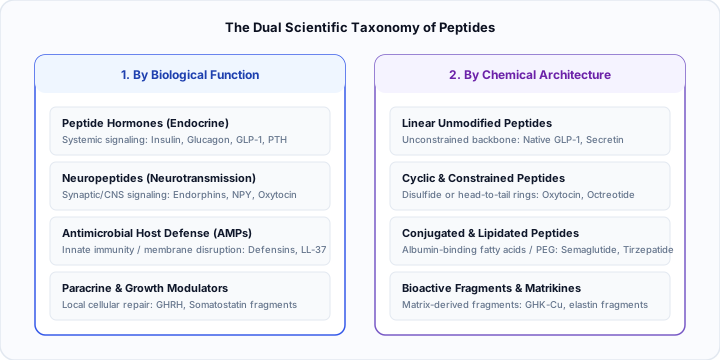
To organize this vast diversity, biomedical science uses two primary classification axes: functional taxonomy (what the peptide does in vivo) and structural taxonomy (how the molecule is constructed chemically). Understanding both frameworks is vital for evaluating therapeutic potential, stability, and clinical evidence [2].
2. Functional Taxonomy: By Biological Role
When organized by their physiological and signaling role in living organisms, peptides fall into four major classes [1]:
1. Peptide Hormones (Endocrine Signaling)
Synthesized in specialized endocrine glands and enteroendocrine cells, peptide hormones travel through systemic circulation to regulate whole-body metabolism, mineral balance, and reproductive cycles. Key examples include:
- Incretin Hormones: Glucagon-like peptide-1 (GLP-1) and glucose-dependent insulinotropic polypeptide (GIP), which amplify postprandial insulin release [3].
- Pancreatic Hormones: Glucagon (29 aa) and Somatostatin (14 or 28 aa), regulating fuel mobilization.
- Pituitary Hormones: Adrenocorticotropic hormone (ACTH, 39 aa), luteinizing hormone-releasing factor (GnRH, 10 aa), and oxytocin (9 aa).
2. Neuropeptides (Neurological Signaling)
Produced by central and peripheral neurons, neuropeptides act as neurotransmitters or neuromodulators with longer-lasting synaptic actions than classical small-molecule transmitters like glutamate or GABA. Examples include substance P (pain transmission), neuropeptide Y (NPY, appetite regulation), and endogenous opioid peptides (endorphins, enkephalins, dynorphins) [1].
3. Antimicrobial Peptides (AMPs / Host Defense)
Evolutionarily ancient effector molecules of innate immunity. AMPs are typically short (12–50 amino acids), net-positively charged (cationic), and structurally amphipathic. Rather than binding a specific protein receptor, they physically insert into the negatively charged phospholipid bilayers of bacterial membranes, creating toroidal pores that cause osmotic lysis [4]. Major human families include alpha- and beta-defensins and cathelicidin (LL-37).
4. Local Paracrine Modulators & Growth Factors
Peptides released locally into interstitial fluid to coordinate wound repair, angiogenesis, and cell differentiation, such as fibroblast growth factor fragments and vasoactive kinins (bradykinin, kallidin) [2].
3. Structural Taxonomy: By Chemical Architecture
Equally critical is the chemical architecture of the peptide molecule, which determines its stability, bioavailability, and receptor-binding conformation [2]:
1. Linear Unmodified Peptides: Straight chains of standard L-amino acids with free N-terminal amines and C-terminal carboxylates. Highly flexible, but rapidly cleared by circulating aminopeptidases and carboxypeptidases (e.g., native GLP-1, native secretin).
2. Cyclic & Disulfide-Constrained Peptides: Peptides containing covalent rings formed either by intramolecular disulfide bonds between cysteine residues (e.g., oxytocin, vasopressin) or by head-to-tail amide backbone cyclization (e.g., cyclosporine, circular plant cyclotides). Cyclization reduces conformational entropy and physically shields vulnerable bonds from proteolytic cleavage [5].
3. Bioactive Peptide Fragments (Matrikines): Short peptide segments liberated from larger parent proteins through regulated extracellular proteolysis. For example, GHK (glycyl-L-histidyl-L-lysine) is a tripeptide fragment liberated from alpha-2-macroglobulin and collagen that chelates copper (GHK-Cu) [2].
4. Conjugated & Lipidated Peptides: Engineered peptides covalently linked to non-peptide chemical moieties. In modern drug discovery, fatty diacids (such as C16 or C18 fatty acids) are acylated to lysine side chains, allowing the peptide to reversibly hitchhike on circulating human serum albumin. This shields the molecule from glomerular filtration and extends half-life by orders of magnitude (e.g., semaglutide, tirzepatide) [6].
4. Classification by Biological Origin
Peptides are also distinguished by how they are generated and sourced [6]:
- Endogenous Peptides: Naturally produced by the human body’s genome and cellular translation machinery.
- Natural Product Peptides (Zoopharmacology & Phytochemistry): Peptides isolated from non-human organisms, particularly venomous animals (cone snails, scorpions, spiders, snakes) and plants. For example, exenatide was derived from the salivary venom of the Gila monster (Heloderma suspectum), and ziconotide was isolated from the cone snail Conus magus [2].
- Fully De Novo Synthetic Peptides: Compounds designed through computational structural biology or phage display libraries that possess no natural evolutionary precursor.
5. Engineering Stable Therapeutic Peptides
Because native peptides have short circulating lifespans, medicinal chemists utilize specialized structural modifications to create viable pharmaceutical medicines [6]:
- D-Amino Acid Substitution: Human proteases are stereospecific for natural L-amino acids. Substituting one or more positions with their mirror-image D-enantiomers prevents enzymatic recognition while preserving receptor binding.
- Non-Canonical Residues: Introducing unnatural amino acids, such as alpha-aminoisobutyric acid (Aib) at position 8 of semaglutide, directly blocks cleavage by dipeptidyl peptidase-4 (DPP-4) [3].
- C-Terminal Amidation & N-Terminal Acetylation: Capping the charged ends of the peptide with amide (-NH₂) or acetyl (Ac-) groups mimics natural hormonal processing and blocks exopeptidase digestion.
- PEGylation: Covalently attaching polyethylene glycol polymers to increase hydrodynamic volume and block renal clearance.
6. Master Scientific Taxonomy Table
| Scientific Category | Primary Mechanism / Target | Structural Feature | Representative Examples |
|---|---|---|---|
| Incretin Hormones | GLP-1R / GIPR GPCR agonism | Linear polypeptides (30–39 aa); often lipidated | Native GLP-1, Semaglutide, Tirzepatide |
| Neuropeptides | Central/peripheral GPCR neurotransmission | Small oligopeptides; N- or C-capped | Substance P, Enkephalins, NPY |
| Host Defense (AMPs) | Bacterial membrane pore formation | Cationic, amphipathic alpha-helices or beta-hairpins | Human Beta-Defensin 2, LL-37 |
| Cyclic Peptides | Diverse GPCR & enzyme inhibition | Disulfide loops or head-to-tail amide rings | Oxytocin, Octreotide, Cyclosporine |
| Matrikines (Fragments) | Integrin / fibroblast signaling | Short cleavage products of extracellular matrix | GHK-Cu, Elastin hexapeptide (VGVAPG) |
| Venom-Derived Peptides | Voltage-gated ion channels, GPCRs | Rich in disulfide bridges (knottins) | Exenatide (Gila monster), Ziconotide (Cone snail) |
Core Scientific Definitions
Precise biomedical definitions for terms used throughout this guide.
- Peptide Hormone
- A water-soluble peptide secreted by endocrine glands directly into the bloodstream to coordinate distant organ physiology and systemic metabolism.
- Neuropeptide
- A peptide synthesized and released by neurons that acts as a neurotransmitter or neuromodulator within the central and peripheral nervous systems.
- Antimicrobial Peptide (AMP)
- An evolutionarily conserved, cationic, amphipathic peptide produced by host immune defenses that directly kills bacteria, fungi, and enveloped viruses.
- Cyclic Peptide
- A peptide sequence in which the N- and C-termini, or internal amino acid side chains, are covalently bonded into a closed ring structure, conferring enzymatic resistance.
- Lipidation
- The chemical conjugation of a lipid or fatty-acid side chain to a peptide backbone to facilitate non-covalent binding to circulating albumin, extending half-life.
- Matrikine
- A bioactive peptide fragment generated by the partial proteolysis of extracellular matrix proteins (such as collagen or elastin) that regulates cellular repair.
Peer-Reviewed References & Primary Sources
This educational guide is built strictly upon peer-reviewed literature, official regulatory guidance, and authoritative biochemical repositories.
-
Signal Transduction (3rd Edition) Academic Press / Elsevier · 2016 · Chapter 2: Transcellular Chemical Messengers
-
The Current State of Peptide Drug Discovery Journal of Medicinal Chemistry · 2018 · 61(4): 1382–1414
-
Mechanisms of Action and Therapeutic Application of Glucagon-like Peptide-1 Cell Metabolism · 2018 · 27(4): 740–756
-
Antimicrobial peptides of multicellular organisms Nature · 2002 · 415(6870): 389–395
-
Seamless proteins and peptides: cyclotides and circular plant peptides Science · 2006 · 311(5767): 1563–1564
-
Therapeutic peptides: Historical perspectives, current development trends, and future directions Bioorganic & Medicinal Chemistry · 2018 · 26(10): 2700–2707
Educational Disclaimer: This guide is produced strictly for biomedical educational purposes and does not constitute medical advice, diagnosis, or treatment recommendations. Experimental peptides discussed herein may lack regulatory authorization for human clinical use. Consult a licensed medical practitioner before considering any therapeutic intervention.