
Evidence-Based Summary
Semaglutide and liraglutide are both FDA-approved synthetic peptide agonists of the human GLP-1 receptor, but they represent two different pharmacological generations. Liraglutide, approved in 2010 for type 2 diabetes (Victoza) and 2014 for chronic weight management (Saxenda), carries a C16 palmitic fatty acid side chain, resulting in a half-life of ~13 hours that mandates once-daily subcutaneous injection. Semaglutide, approved in 2017 (Ozempic) and 2021 (Wegovy), was engineered with an amino acid substitution at position 8 to prevent DPP-4 enzymatic degradation and a C18 fatty diacid chain attached via a hydrophilic spacer, extending its half-life to ~168 hours (once weekly). In head-to-head randomized trials, semaglutide demonstrated statistically significant superiority over liraglutide: in the 40-week SUSTAIN-7 trial in diabetes, semaglutide achieved greater HbA1c and weight reductions; in the 68-week STEP-8 trial in obesity, semaglutide 2.4 mg produced a mean body weight reduction of 15.8% compared to 6.4% with liraglutide 3.0 mg. Both medications carry an FDA Boxed Warning for thyroid C-cell tumors based on rodent findings.
Quick Comparison: Semaglutide vs Liraglutide
A high-level comparison of molecule class, molecular receptor targets, FDA regulatory approvals, and verified clinical programs.
| Feature | Semaglutide | Liraglutide |
|---|---|---|
| Primary drug class | Second-generation GLP-1 receptor agonist | First-generation GLP-1 receptor agonist |
| Receptor selectivity | Selective human GLP-1 receptor agonist | Selective human GLP-1 receptor agonist |
| Molecular architecture | 31-aa peptide; Aib8 substitution; C18 fatty diacid + PEG spacer at Lys26 | 31-aa peptide; Lys34Arg substitution; C16 palmitoyl fatty acid at Lys26 |
| Dosing frequency | Once weekly (subcutaneous) or once daily (oral tablet) | Once daily (subcutaneous) |
| Elimination half-life | ~165 to 168 hours (~1 week) | ~13 hours |
| U.S. Brand names | Ozempic (T2D injection), Wegovy (obesity injection), Rybelsus (T2D oral) | Victoza (T2D injection), Saxenda (obesity injection) |
| Initial FDA approval date | December 2017 (Ozempic); June 2021 (Wegovy) | January 2010 (Victoza); December 2014 (Saxenda) |
| Head-to-head weight loss (STEP-8) | 15.8% mean weight reduction at 68 weeks | 6.4% mean weight reduction at 68 weeks |
| Proven MACE CV risk reduction | Yes (SUSTAIN-6 & SELECT trials; T2D and CVD + obesity) | Yes (LEADER trial; T2D with high cardiovascular risk) |
| FDA Boxed Warning | Risk of thyroid C-cell tumors (rodent carcinogenicity) | Risk of thyroid C-cell tumors (rodent carcinogenicity) |
How Structural Engineering Differentiates Semaglutide from Liraglutide
Both molecules are based on native human GLP-1(7-37), but precise amino acid substitutions and lipid side chains dramatically alter their pharmacokinetics and pharmacodynamics.
Semaglutide: DPP-4 Resistance and Diacid Albumin Anchoring
Primary Target: GLP-1 Receptor (GLP-1R)
Affinity Profile: High selectivity and affinity; 94% sequence homology to human GLP-1
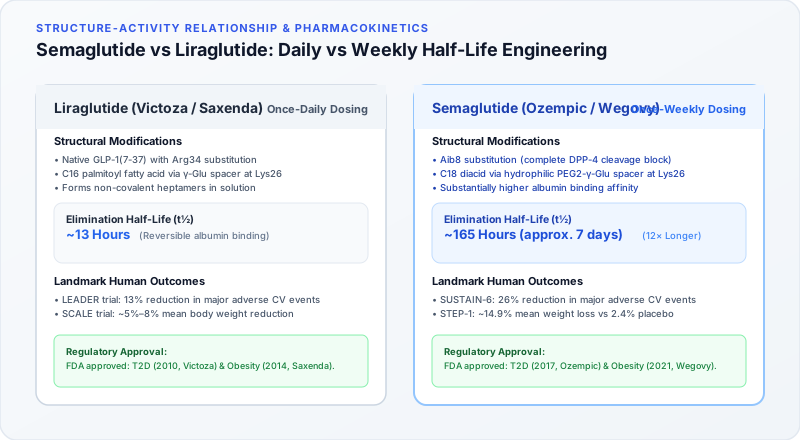
Semaglutide replaces alanine with 2-aminoisobutyric acid (Aib) at position 8, sterically hindering dipeptidyl peptidase-4 (DPP-4) enzymatic breakdown. At lysine-26, it features a specialized hydrophilic spacer attached to a C18 fatty diacid, providing ultra-strong non-covalent binding to human serum albumin. This shields the molecule from renal filtration and extends elimination half-life to 168 hours, enabling smooth, continuous weekly receptor occupancy.
Liraglutide: Monoacid Acylation & Daily Clearance Profile
Primary Targets: GLP-1 Receptor (GLP-1R)
Affinity Profile: High selectivity; 97% sequence homology to human GLP-1
Liraglutide replaces lysine with arginine at position 34 and attaches a single 16-carbon palmitic fatty acid chain directly to lysine-26 via a glutamic acid spacer. This promotes reversible self-association into heptamers at the subcutaneous depot and non-covalent binding to albumin, delaying renal filtration. However, without the Aib8 substitution, liraglutide remains partially susceptible to DPP-4 and endopeptidases, resulting in a half-life of 13 hours that requires daily injections.
FDA Approvals and Clinical Indications
Both drugs have achieved widespread global regulatory approvals across diabetes and obesity indications.
Semaglutide Status & Formulations
Ozempic (Semaglutide Injection)
Approval History: 2017 (NDA 209637)
Approved Indications: Type 2 diabetes glycemic control; MACE cardiovascular risk reduction in T2D with established CVD
View Regulatory PackageWegovy (Semaglutide Injection)
Approval History: 2021 (NDA 215256)
Approved Indications: Chronic weight management (BMI ≥30 or ≥27 with comorbidity); Cardiovascular risk reduction in obesity with established CVD (added 2024)
View Regulatory PackageLiraglutide Status & Formulations
Victoza (Liraglutide Injection)
Approval History: 2010 (NDA 022341)
Approved Indications: Type 2 diabetes glycemic control (ages 10+); MACE cardiovascular risk reduction in adults with T2D and CVD
View Regulatory PackageSaxenda (Liraglutide Injection)
Approval History: 2014 (NDA 206321)
Approved Indications: Chronic weight management in adults (BMI ≥30 or ≥27 with comorbidity) and pediatric patients aged 12+ with obesity
View Regulatory PackageCritical Regulatory Distinction
Liraglutide has reached the end of primary patent exclusivity in key jurisdictions, opening the market to approved generic liraglutide formulations. Semaglutide remains protected under primary compound and formulation patents in major markets.
Landmark Clinical Development Programs
Both drugs were validated through massive international phase 3 clinical programs.
Semaglutide: Semaglutide: SUSTAIN, STEP & SELECT
Semaglutide’s development established superior glycemic reduction (SUSTAIN trials), mean weight loss exceeding 15% (STEP trials), and a statistically significant 20% reduction in MACE in adults with cardiovascular disease and overweight/obesity without diabetes (SELECT trial, NEJM 2023).
Liraglutide: Liraglutide: LEAD, SCALE & LEADER
Liraglutide established the clinical paradigm for GLP-1 RAs. The SCALE trial demonstrated a mean ~8% weight loss, and the landmark LEADER trial proved a 13% reduction in MACE risk in patients with type 2 diabetes, establishing the first cardiovascular outcome benefit for the GLP-1 class.
STEP-8 Head-to-Head Randomized Clinical Trial
The 68-week STEP-8 randomized trial directly compared once-weekly semaglutide 2.4 mg with once-daily liraglutide 3.0 mg in adults with overweight or obesity.
STEP-8 (Semaglutide vs Liraglutide for Weight Management)
Head-to-Head RCTClinicalTrials.gov: NCT04074161 · Study Design: Randomized, open-label, 68-week Phase 3b trial conducted at 19 sites in the United States
Participant Population: 338 adults with BMI ≥30 kg/m2 or ≥27 kg/m2 with ≥1 weight-related comorbidity, without diabetes
Assigned Interventions: Once-weekly subcutaneous semaglutide 2.4 mg (n=126) vs once-daily subcutaneous liraglutide 3.0 mg (n=127), both with lifestyle counseling
Primary Endpoint: Percentage change in body weight from baseline to week 68
Direct Head-to-Head Findings
| Outcome Measure | Semaglutide | Liraglutide | Statistical Significance & Findings |
|---|---|---|---|
| Mean body weight change | -15.8% | -6.4% | Difference -9.4% (p < 0.001) |
| Achieved ≥10% weight loss | 70.9% of participants | 25.6% of participants | OR 6.3 (p < 0.001) |
| Achieved ≥15% weight loss | 55.6% of participants | 12.0% of participants | OR 7.9 (p < 0.001) |
| Achieved ≥20% weight loss | 38.5% of participants | 6.0% of participants | OR 8.2 (p < 0.001) |
| Treatment discontinuation for any reason | 13.5% | 27.6% | Fewer discontinuations with semaglutide |
Safety in STEP-8 (Semaglutide vs Liraglutide for Weight Management)
Gastrointestinal adverse events were the most common in both groups and occurred at similar rates (84.1% with semaglutide vs 82.7% with liraglutide).
Essential Methodological Limitations
- Open-label trial design (participants and investigators were aware of group assignment due to different injection devices)
- Population was predominantly female (78.4%) and White (73.7%), limiting demographic generalizability
- The trial was not powered to assess cardiovascular hard endpoints
Adverse Reactions & Class Safety Considerations
Because both molecules target the same receptor, their safety profiles are qualitatively similar, dominated by transient gastrointestinal symptoms.
Risk of Thyroid C-Cell Tumors (Class Boxed Warning)
Both semaglutide and liraglutide carry an FDA Boxed Warning stating that GLP-1 receptor agonists cause dose-dependent and treatment-duration-dependent thyroid C-cell tumors in rodents. Both medications are contraindicated in patients with a personal or family history of Medullary Thyroid Carcinoma (MTC) or Multiple Endocrine Neoplasia syndrome type 2 (MEN 2).
| Safety Consideration | Semaglutide | Liraglutide |
|---|---|---|
| Most frequent adverse reactions | Nausea, diarrhea, vomiting, constipation, abdominal pain | Nausea, diarrhea, constipation, vomiting, headache |
| Treatment discontinuation for any reason (STEP-8) | 13.5% of patients | 27.6% of patients |
| Pancreatitis risk | Infrequent (<0.2%); caution in patients with history of pancreatitis | Infrequent (<0.3%); caution in patients with history of pancreatitis |
| Gallbladder disease (cholelithiasis) | Elevated risk associated with rapid weight reduction | Elevated risk associated with rapid weight reduction |
| Injection frequency burden | Low (1 injection weekly) | Higher (7 injections weekly / 365 per year) |
What Semaglutide and Liraglutide Have in Common
Where the two compounds overlap in biology, evidence or regulatory context.
Identical Primary Mechanism of Action
Both medications are selective GLP-1 receptor agonists that augment glucose-dependent insulin secretion, inhibit postprandial glucagon release, slow gastric motility, and promote satiety.
Proven Cardiovascular Outcomes
Both drugs have demonstrated statistically significant MACE reduction in randomized cardiovascular outcome trials (SELECT/SUSTAIN-6 for semaglutide; LEADER for liraglutide).
Qualitatively Identical Adverse Reactions
Gastrointestinal effects (nausea, vomiting, diarrhea, constipation) represent the predominant side effect for both agents.
Identical FDA Boxed Warning
Both carry the class warning for thyroid C-cell tumors and are contraindicated in patients with MTC or MEN 2.
Key Scientific & Clinical Differences
Meaningful distinctions in mechanism, strength of evidence, safety and regulatory status.
Administration Frequency & Half-Life
Semaglutide is administered once weekly (~168 h half-life); liraglutide is administered once daily (~13 h half-life).
Weight Loss Efficacy
In the STEP-8 head-to-head trial, semaglutide achieved more than double the mean weight reduction of liraglutide (15.8% vs 6.4%).
Available Formulations
Semaglutide is available as subcutaneous injection and as an oral tablet (Rybelsus); liraglutide is only available as a subcutaneous injection.
Pediatric Approval Spectrum
Saxenda (liraglutide) is FDA approved down to age 12; Wegovy (semaglutide) is also approved for pediatric patients aged 12 and older.
Scientific Comparison vs Clinical Recommendations
Inside Peptides compares scientific evidence, receptor pharmacology, and official regulatory documents to advance public and professional understanding. We do not determine which compound is appropriate for an individual patient, rank medications with arbitrary scores, or recommend initiating or switching treatments.
Decisions about any medicine require a licensed healthcare professional who can weigh personal medical history, contraindications, interactions and monitoring needs. Unapproved peptides have no established safe use, and products sold as “research chemicals” are not the preparations studied in clinical research.
Approved Uses vs Online Claims
A critical scientific distinction between verified, FDA-approved clinical uses and unverified claims circulating on social media and vendor platforms.
Liraglutide is obsolete now that Semaglutide exists
insufficientLiraglutide remains an FDA-approved, effective therapeutic medicine.
While semaglutide offers greater weight loss and weekly convenience, liraglutide remains a valuable clinical alternative for patients who cannot tolerate weekly dosing, patients requiring daily dose titration flexibility, or where generic availability improves access.
Switching from Liraglutide to Semaglutide causes dangerous side effects
insufficientClinical guidance outlines clear transition protocols under medical supervision.
Physicians routinely transition patients between GLP-1 RAs by starting semaglutide at the lowest introductory dose (0.25 mg weekly) after discontinuing daily liraglutide, allowing gastrointestinal tolerance to reset.
Evidence Strength Across Clinical Domains
Inside Peptides evaluates scientific certainty at the claim level. Because clinical evidence varies significantly depending on the therapeutic endpoint evaluated, each domain is assessed independently.
Type 2 Diabetes Glycemic Control
Landmark Phase 3 trials and SUSTAIN-7 head-to-head show high certainty for both; semaglutide slightly superior in HbA1c reduction.
Weight Loss Efficacy
STEP-8 trial definitively proves semaglutide superiority in percentage body weight lost.
Cardiovascular Risk Reduction (T2D)
Both SUSTAIN-6 and LEADER demonstrated significant MACE benefit.
Cardiovascular Risk Reduction (Obesity without T2D)
Semaglutide demonstrated 20% MACE reduction in SELECT; liraglutide was not evaluated in an equivalent non-diabetic CVOT.
What Research Still Doesn’t Tell Us
Identifying open scientific questions, pending active-comparator trials, and areas where long-term clinical data remain incomplete.
Direct Macrovascular Comparison in Head-to-Head CVOTs
While both LEADER (liraglutide) and SUSTAIN-6/SELECT (semaglutide) demonstrated significant MACE risk reductions, no randomized trial has directly compared long-term cardiovascular event rates between once-daily and once-weekly GLP-1 RAs in an active-comparator design.
Real-World Long-Term Persistence and Adherence
Observational claims database analyses suggest higher persistence with once-weekly subcutaneous injections over once-daily injections, but multi-year comparative adherence and its impact on hard outcomes require further real-world prospective evaluation.
Comparative Weight Regain Following Discontinuation
Both medications show significant weight rebound upon cessation in trial extension phases (STEP 1 extension for semaglutide; SCALE extension for liraglutide), but head-to-head trajectories of rebound kinetics and metabolic recovery remain unstudied.
Direct Comparison in Neurodegenerative Disease Progression
Both liraglutide and semaglutide have shown neuroprotective signals in preclinical models, but direct head-to-head trials evaluating progression markers in Alzheimer’s disease or Parkinson’s disease have not been conducted.
Related Compound Profiles
Individual profiles provide full molecular datasheets, CAS numbers, preclinical histories, and compound monographs.
Related Educational Resources
Scientific & Regulatory References
Every pharmacological mechanism, clinical trial result, and regulatory approval cited on this page is traceable to official FDA prescribing documentation, ClinicalTrials.gov registries, or peer-reviewed medical publications.
-
Peer-Reviewed Clinical Trial
Effect of Weekly Subcutaneous Semaglutide vs Daily Liraglutide on Body Weight in Adults With Overweight or Obesity Without Diabetes: The STEP 8 Randomized Clinical Trial
-
Peer-Reviewed Clinical Trial
Semaglutide versus dulaglutide once weekly in patients with type 2 diabetes (SUSTAIN 7): a randomised, open-label, phase 3b trial
-
Peer-Reviewed Clinical Trial
Liraglutide and Cardiovascular Outcomes in Type 2 Diabetes
-
Peer-Reviewed Clinical Trial
Semaglutide and Cardiovascular Outcomes in Obesity without Diabetes