

Field Summary & Status
Strong Human EvidenceThe Incretin Paradigm & Energy Balance
Metabolic peptides are endogenous amino acid chains secreted primarily by enteroendocrine cells of the gastrointestinal tract, islets of Langerhans in the pancreas, and distinct neuronal populations in the brainstem and hypothalamus. Their primary physiological responsibility is the coordinate management of nutrient intake, gastric processing, glucose-dependent insulin release, hepatic glycogen metabolism, and central satiety.
The foundational physiological concept behind this field is the "incretin effect", first documented in the 1960s, which describes the phenomenon whereby an oral glucose load stimulates substantially higher insulin secretion than an equivalent dose administered intravenously, despite identical resulting plasma glucose concentrations. This observation proved that gut-derived humoral messengers alert the endocrine pancreas to incoming nutrition before systemic hyperglycemia occurs.
Over four decades of molecular characterization have identified Glucagon-Like Peptide-1 (GLP-1) and Glucose-Dependent Insulinotropic Polypeptide (GIP) as the two primary physiological incretins. Synthetic pharmacology has expanded beyond endogenous peptide replacement to long-acting receptor agonists, dual agonists, and unimolecular triple agonists that activate distinct metabolic pathways simultaneously.
Biological Systems & Signaling Mechanisms
Metabolic peptides help the gut, pancreas, brain, and other tissues communicate about food intake and energy use. The pathways below explain the receptor signals behind that communication.
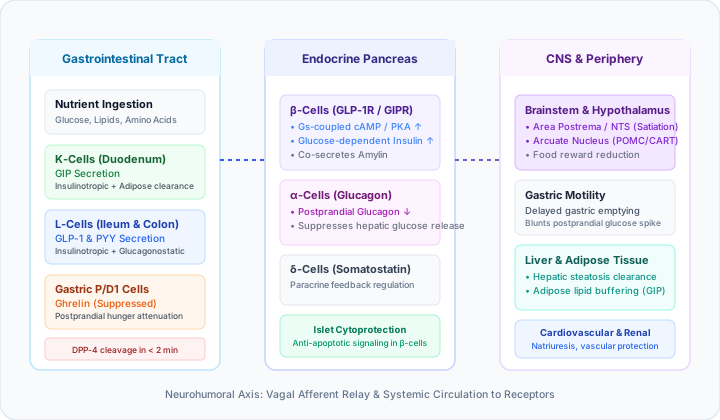
Gastrointestinal Enteroendocrine Cells
Specialized intestinal epithelial cells directly sense luminally absorbed carbohydrates, amino acids, and fatty acids. Distal intestinal L-cells synthesize and release GLP-1 and Peptide YY (PYY) in response to nutrient flux, while proximal K-cells secrete GIP. These short-lived peptides (endogenous half-life < 2–3 minutes due to rapid enzymatic degradation by dipeptidyl peptidase-4 / DPP-4) act locally on enteric neurons and pass into portal circulation.
GLP-1, GIP, PYY (3-36), Oxyntomodulin
Endocrine Pancreas (Islets of Langerhans)
Incretin peptides bind to class B G-protein-coupled receptors (GPCRs) on islet membranes. On beta-cells, GLP-1 receptor activation couples via Gs to adenylyl cyclase, elevating intracellular cAMP and potentiating glucose-dependent insulin exocytosis while preserving beta-cell functional mass. Concurrently, GLP-1 suppresses inappropriate postprandial glucagon secretion from alpha-cells. Conversely, GIP provides glucagonotropic support during hypoglycemia while stimulating insulin during hyperglycemia.
Insulin, Glucagon, Amylin, Somatostatin
Central Nervous System (Hypothalamus & Brainstem)
Peripheral metabolic peptides signal into the central nervous system via both vagal afferent sensory neurons and direct circulation access at circumventricular organs lacking a tight blood-brain barrier (such as the area postrema and median eminence). Activation of GLP-1 and amylin receptors in the nucleus tractus solitarius (NTS) and arcuate nucleus suppresses appetite, delays gastric emptying, enhances satiation, and reduces food reward drive.
GLP-1 analogues, Amylin, Ghrelin (orexigenic counter-regulator), Neuropeptide Y
Peripheral Tissues (Liver, Adipose & Muscle)
Glucagon receptor signaling promotes hepatic glycogenolysis and gluconeogenesis while stimulating mitochondrial beta-oxidation and energy expenditure. GIP receptor signaling in white adipose tissue promotes lipid buffering, improves postprandial lipid clearance, and enhances adipose insulin sensitivity, preventing ectopic fat deposition in liver and skeletal muscle.
Glucagon receptor agonists, GIP analogues
Major Peptide Classes & Receptor Targets
Pharmacological research has evolved from identifying endogenous hormone fragments to creating synthetic peptides engineered for extended circulating half-lives and multi-receptor target engagement.
GLP-1 Receptor Agonists (GLP-1RAs)
Target: GLP-1 Receptor (Class B GPCR)Stimulates glucose-dependent insulin secretion, suppresses postprandial glucagon, slows gastric emptying, induces central satiety.
Fatty acid acylation (albumin binding) and amino acid substitutions (resistance to DPP-4 cleavage) extending half-life from 2 minutes to 165+ hours.
Dual GIP / GLP-1 Receptor Agonists ("Twincretins")
Target: GIPR & GLP-1R (Unimolecular Co-agonism)Synergistic appetite suppression, enhanced insulin secretion, improved lipid clearance in adipose tissue, and reduced GI tolerability symptoms compared to supratherapeutic GLP-1 monotherapy.
Engineered 39-amino-acid backbone containing non-coded aminoisobutyric acid (Aib) residues and a C20 diacid fatty chain that balances affinity at both human receptors.
Triple GLP-1 / GIP / Glucagon Agonists ("Tri-agonists")
Target: GLP-1R, GIPR & GCGR (Tri-specific GPCR Activation)Combines the appetite and glycemic control of GLP-1/GIP with glucagon-mediated stimulation of hepatic fatty acid oxidation, lipolysis, and whole-body basal energy expenditure.
Precision balanced potency profile preventing glucagon-induced hyperglycemia while maximizing metabolic rate and profound hepatic steatosis clearance.
Amylin Analogues & Co-agonists
Target: Calcitonin Receptor (CTR) complexed with RAMP1/2/3Delays gastric emptying, suppresses postprandial glucagon secretion, acts centrally at the area postrema to induce postprandial satiation through non-GLP-1 neural pathways.
Proline substitutions preventing amyloid fibril formation (pramlintide) and acylated long-acting analogues (cagrilintide) paired with GLP-1RAs.
Ghrelin Axis Modulators (GHSR Ligands)
Target: Growth Hormone Secretagogue Receptor (GHSR-1a)Endogenous "hunger hormone" stimulating appetite during fasting, promoting gastric motility, and triggering pulsatile growth hormone release.
Investigational GHSR inverse agonists, neutral antagonists, and GOAT (ghrelin O-acyltransferase) inhibitors to curb hyperphagia and improve metabolic health.
Landmark Clinical Trials & Human Data
Studies in people examine treatment effects, safety, and pharmacokinetics (how the body absorbs, distributes, breaks down, and removes a substance). These questions require different measurements; not every study establishes a treatment benefit.
| Trial / Study | Identifier / Compound | Phase & Cohort | Status / Duration | Primary Findings |
|---|---|---|---|---|
| SUSTAIN-6 |
Semaglutide (Subcutaneous, once-weekly)
NCT01720446
|
Phase 3 (Cardiovascular Outcomes Trial)
3,297 patients with Type 2 Diabetes and high CV risk
|
104 weeks |
Statistically significant 26% reduction in MACE risk compared with placebo (HR 0.74, 95% CI 0.58–0.95; p < 0.001 for non-inferiority, p = 0.02 for superiority). Significant HbA1c and weight reduction.
Marso SP, et al. N Engl J Med. 2016;375(19):1834-1844. · PMID: 27633186
|
| STEP-1 |
Semaglutide 2.4 mg (Subcutaneous, once-weekly)
NCT03548935
|
Phase 3 (Double-blind RCT)
1,961 adults with Overweight or Obesity (without diabetes)
|
68 weeks |
Mean weight change of -14.9% with semaglutide vs -2.4% with placebo (difference -12.4 percentage points; 95% CI -13.4 to -11.5; p < 0.001). 86.4% achieved ≥5% weight loss vs 31.5% with placebo.
Wilding JPH, et al. N Engl J Med. 2021;384(11):989-1002. · PMID: 33567185
|
| SURPASS-2 |
Tirzepatide (5 mg, 10 mg, 15 mg) vs Semaglutide 1.0 mg
NCT03987919
|
Phase 3 (Open-label Head-to-Head RCT)
1,879 patients with Type 2 Diabetes inadequately controlled on metformin
|
40 weeks |
Tirzepatide demonstrated statistically superior reductions in HbA1c across all doses (-2.01% to -2.30% vs -1.86% for semaglutide; p < 0.001) and dose-dependent superior weight loss (-7.6 kg to -11.2 kg vs -5.7 kg; p < 0.001).
Frías JP, et al. N Engl J Med. 2021;385(6):503-515. · PMID: 34170647
|
| SURMOUNT-1 |
Tirzepatide (5 mg, 10 mg, 15 mg once-weekly)
NCT04184622
|
Phase 3 (Double-blind RCT)
2,539 adults with Obesity or Overweight with ≥1 weight-related complication
|
72 weeks |
Mean body weight reductions of -15.0% (5 mg), -19.5% (10 mg), and -20.9% (15 mg) compared with -3.1% in the placebo group (p < 0.001). Up to 91% of participants in the 15 mg cohort achieved ≥5% reduction.
Jastreboff AM, et al. N Engl J Med. 2022;387(3):205-216. · PMID: 35658024
|
| TRIUMPH-1 (Phase 2) |
Retatrutide (Triple GIP/GLP-1/Glucagon Agonist)
NCT05882045
|
Phase 2 (Randomized Dose-Ranging Trial)
338 adults with Obesity or Overweight
|
48 weeks |
Least-squares mean weight change at 48 weeks reached -24.2% in the 12 mg cohort compared with -2.1% with placebo (p < 0.001). 100% of participants receiving 8 mg or 12 mg achieved ≥5% weight loss. Notable resolution of hepatic steatosis.
Jastreboff AM, et al. N Engl J Med. 2023;389(6):514-526. · PMID: 37366315
|
| REDEFINE-1 |
CagriSema (Fixed-dose Cagrilintide 2.4 mg + Semaglutide 2.4 mg)
NCT05557760
|
Phase 3 (Double-blind RCT)
3,400 adults with Overweight or Obesity
|
68 weeks |
Evaluating synergistic weight loss by combining amylin receptor agonism with GLP-1 receptor agonism to target distinct hypothalamic and hindbrain satiety circuits simultaneously.
ClinicalTrials.gov Protocol Record NCT05557760. · PMID: 36007530
|
Approved Medicines vs. Investigational Candidates
A critical principle of Inside Peptides is maintaining a clear distinction between regulatory-approved prescription medicines and investigational candidates.
| Compound | Class & Target | Regulatory Status | Approved / Studied Indications | Administration Route |
|---|---|---|---|---|
| Semaglutide |
GLP-1 Receptor Agonist
Selective GLP-1R agonist with C18 diacid fatty chain albumin binder
|
FDA & EMA Approved | Type 2 Diabetes (Ozempic, Rybelsus), Chronic Weight Management (Wegovy), MACE risk reduction in CVD (Wegovy) | Once-weekly subcutaneous injection / Once-daily oral tablet |
| Tirzepatide |
Dual GIP / GLP-1 Receptor Agonist
Unimolecular co-agonist with equal GIP affinity and ~5-fold lower GLP-1 affinity vs native
|
FDA & EMA Approved | Type 2 Diabetes (Mounjaro), Chronic Weight Management (Zepbound) | Once-weekly subcutaneous injection |
| Liraglutide |
GLP-1 Receptor Agonist
First-generation acylated GLP-1 analogue with C16 fatty acid chain
|
FDA & EMA Approved | Type 2 Diabetes (Victoza), Chronic Weight Management (Saxenda) | Once-daily subcutaneous injection |
| Retatrutide (LY3437943) |
Triple GLP-1 / GIP / Glucagon Agonist
Potent tri-agonist engineered with C20 fatty acid moiety and alpha-methyl leucine substitutions
|
Investigational (Phase 3) | Under Phase 3 investigation for Obesity, Type 2 Diabetes, and MASH (Nonalcoholic Steatohepatitis) | Once-weekly subcutaneous injection |
| Cagrilintide (+ CagriSema) |
Amylin Analogue / Dual Amylin-GLP-1 Co-agonist
Acylated amylin analogue targeting CTR/RAMP receptors; combined with semaglutide
|
Investigational (Phase 3) | Under Phase 3 investigation for Chronic Weight Management and Glycemic Control in T2D | Once-weekly subcutaneous co-formulation |
| Pramlintide |
Synthetic Amylin Analogue
Proline-substituted non-amyloidogenic amylin analogue
|
FDA Approved | Adjunctive treatment in Type 1 and Type 2 Diabetes with mealtime insulin (Symlin) | Subcutaneous injection prior to major meals |
Safety Profile, Adverse Effects & Class Warnings
Because metabolic peptides activate receptor pathways distributed across the gastrointestinal tract, autonomic nervous system, and systemic vasculature, specific pharmacological class effects and clinical warnings have been characterized through multi-year trial registries and post-market pharmacovigilance.
Gastrointestinal Tolerability Profile
Common / Dose-DependentNausea (15–40%), vomiting, diarrhea, and constipation are the most frequently reported adverse effects across GLP-1 and dual GIP/GLP-1 trials. These symptoms are predominantly mild to moderate in severity, peak during initial dose escalation, and attenuate over continued exposure. Slower titration schedules substantially decrease discontinuation rates.
Pancreatic Surveillance (Pancreatitis & Amylase/Lipase)
Monitoring Class WarningAsymptomatic elevations in serum amylase and lipase are frequently observed with incretin therapy without corresponding clinical symptoms. Systematic reviews of large cardiovascular outcome trials (e.g., SUSTAIN-6, LEADER, SURPASS) have not demonstrated a statistically significant elevated incidence of acute pancreatitis compared with control arms; nevertheless, medication should be promptly discontinued if pancreatitis is clinically suspected.
Rodent C-Cell Hyperplasia & Medullary Thyroid Carcinoma
Boxed Warning / Rodent SpecificityLong-acting GLP-1 receptor agonists carry an FDA boxed warning regarding thyroid C-cell tumors based on rodent carcinogenicity bioassays. However, human C-cells express vastly lower GLP-1 receptor density than rodent cells, and extensive epidemiological registries over two decades have not established a causal link in humans. These agents remain formally contraindicated in patients with a personal or familial history of medullary thyroid carcinoma (MTC) or Multiple Endocrine Neoplasia syndrome type 2 (MEN 2).
Gallbladder & Biliary Disease
Known Risk FactorAn increased incidence of cholelithiasis (gallstones) and cholecystitis is observed during rapid pharmacological weight loss (> 1–2 kg/week), primarily reflecting altered biliary cholesterol saturation and reduced gallbladder motility rather than direct hepatotoxic injury.
Body Composition Dynamics (Lean Mass Retention)
Clinical ConsiderationIn major clinical trials of profound weight loss, approximately 20–35% of total mass lost comprises fat-free mass (skeletal muscle, extracellular fluid, and organ mass), a proportion consistent with non-pharmacological caloric restriction and bariatric surgery. Research emphasizes adequate dietary protein intake and structured resistance exercise to mitigate muscle catabolism during pharmacotherapy.
Discontinuation Kinetics & Weight Regain
Chronic Disease ParadigmStep-4 and SURMOUNT-4 withdrawal trials showed that cessation of incretin pharmacotherapy leads to gradual regain of approximately two-thirds of lost body weight and partial reversal of glycemic improvements within one year. This confirms that metabolic peptide therapy treats chronic pathophysiological set-points rather than acting as a curative short-term intervention.
Unresolved Scientific Questions
Key mechanistic and translational questions currently under active scientific investigation.
What is the optimal receptor activation ratio in multi-agonists?
While dual GIP/GLP-1 and triple GIP/GLP-1/Glucagon agonists show enhanced efficacy, the exact balance of potency required to maximize weight loss and hepatic fat clearing without provoking glucagon-induced tachycardia or hyperglycemia remains an active debate in drug design.
Can metabolic peptides demonstrate disease-modifying neuroprotection?
Preclinical models demonstrate that central GLP-1 receptor agonism attenuates neuroinflammation, reduces microglial activation, and protects against amyloid and tau pathology. Active clinical trials (such as EVOKE and EVOKE Plus in early Alzheimer’s disease) are evaluating whether these findings translate into cognitive preservation in human cohorts.
Why do inter-individual response variations occur?
Despite impressive mean reductions in clinical trials, a minority of patients experience minimal weight loss (< 5%) or exhibit severe gastrointestinal intolerance. Genetic variations in GPCR expression, gut microbiome composition, and central nervous system circuitry are currently being investigated to identify predictive biomarkers.
What are the cardiovascular outcomes of triple agonists?
While GLP-1 receptor monotherapy has demonstrated reductions in MACE and all-cause mortality in high-risk patients, long-term cardiovascular outcome trials (CVOTs) for triple agonists containing glucagon receptor activity, which transiently increases heart rate, are currently ongoing.
Evolution of Research & Milestones
Historical scientific breakthroughs, isolation events, structural discoveries, and regulatory milestones.
Discovery of Secretin
William Bayliss and Ernest Starling identify secretin in intestinal mucosa, formulating the concept of humoral chemical messengers and establishing the foundation of endocrine physiology.
Isolation of Insulin
Frederick Banting, Charles Best, James Collip, and John Macleod isolate insulin from canine pancreas, turning type 1 diabetes from a fatal diagnosis into a manageable condition.
Discovery of the Incretin Effect
Elrick and McIntyre demonstrate that oral glucose stimulates vastly greater insulin secretion than intravenous glucose, proving the existence of gastrointestinal insulin-stimulating factors.
Identification of GIP
John Brown and colleagues isolate Glucose-Dependent Insulinotropic Polypeptide from porcine intestinal extracts, identifying the first chemical incretin.
Cloning and Characterization of GLP-1
Svetlana Mojsov, Graeme Bell, and Joel Habener clone proglucagon and demonstrate that truncated peptide GLP-1(7-37) is a potent insulinotropic hormone in mammalian islets.
First GLP-1RA Approved: Exenatide
Synthetic exendin-4 (Byetta), originally discovered in Gila monster venom by John Eng, receives FDA approval as the first clinical GLP-1 receptor agonist for type 2 diabetes.
Long-Acting Analogues (Liraglutide & Semaglutide)
Acylated peptide engineering allows once-daily (liraglutide) and once-weekly (semaglutide) administration, with landmark CVOTs proving cardiovascular risk reduction.
High-Dose Semaglutide 2.4 mg Approved for Obesity
FDA approves Wegovy following the STEP trial series, establishing metabolic peptide therapy as a primary medical treatment for chronic obesity.
Approval of First Dual Agonist (Tirzepatide)
Tirzepatide receives approvals for diabetes (Mounjaro) and obesity (Zepbound), crossing the 20% mean weight reduction threshold in clinical trials.
Advent of Triple Agonists & Co-agonist Formulations
Phase 2 and 3 trials for retatrutide (triple agonist) and CagriSema demonstrate unprecedented ~24% weight reductions and profound reversal of metabolic dysfunction-associated steatotic liver disease.
Scientific References
Primary scientific publications, randomized controlled trials, and clinical consensus papers referenced in this field overview.
-
Semaglutide and Cardiovascular Outcomes in Patients with Type 2 Diabetes New England Journal of Medicine · 2016 · 375 · (19) · 1834-1844
-
Once-Weekly Semaglutide in Adults with Overweight or Obesity New England Journal of Medicine · 2021 · 384 · (11) · 989-1002
-
Tirzepatide versus Semaglutide Once Weekly in Patients with Type 2 Diabetes New England Journal of Medicine · 2021 · 385 · (6) · 503-515
-
Tirzepatide Once Weekly for the Treatment of Obesity New England Journal of Medicine · 2022 · 387 · (3) · 205-216
-
Triple-Hormone-Receptor Agonist Retatrutide for Obesity: A Phase 2 Trial New England Journal of Medicine · 2023 · 389 · (6) · 514-526
-
Mechanisms of Action and Therapeutic Application of Glucagon-like Peptide-1 Cell Metabolism · 2018 · 27 · (4) · 740-756
-
Incretin hormones: Their role in health and disease Diabetes, Obesity and Metabolism · 2021 · 23 · (Suppl 1) · 5-34
-
Glucagon-like peptide 1 (GLP-1) Molecular Metabolism · 2019 · 30 · 72-130
-
A rationally designed monomeric peptide triagonist corrects obesity and diabetes in rodents Nature Medicine · 2015 · 21 · (1) · 27-36
-
The Physiology of Glucagon-like Peptide 1 Physiological Reviews · 2007 · 87 · (4) · 1409-1439
-
Semaglutide and Cardiovascular Outcomes in Obesity without Diabetes (SELECT Trial) New England Journal of Medicine · 2023 · 389 · (24) · 2221-2232
-
Effects of once-weekly semaglutide on appetite, energy intake, and food preference in subjects with obesity Diabetes, Obesity and Metabolism · 2017 · 19 · (9) · 1242-1251
Scientific & Educational Disclaimer
InsidePeptides.org provides scientific and educational analysis of peer-reviewed research for informational purposes only. This overview does not constitute medical advice, diagnosis, treatment, prescription, or clinical guidance. Incretin and metabolic peptide medicines require physician oversight, prescription authorization, and regular clinical monitoring. Never adjust, initiate, or discontinue prescribed treatments without direct consultation with a qualified medical specialist.