
Where Are Peptides Found Naturally in the Human Body?
Discover where the body makes natural peptides, what insulin, GLP-1, oxytocin and defensins do, and why natural signaling differs from peptide medicines.

Key takeaways
- Peptides are made in many tissues, including the brain, pancreas, gut, heart, and barrier tissues.
- Where a peptide is made can differ from where it is released and where it acts.
- A natural biological role does not establish the safety or effectiveness of a manufactured product.
In this article
Peptides occur throughout the human body. They are made by specialized cells in the brain, pancreas, digestive tract, heart, skin, and other tissues. Some travel in blood as hormones; others carry messages between nearby cells or help defend tissue surfaces. Insulin, glucagon, GLP-1, GIP, oxytocin, vasopressin, and defensins are examples, not a complete inventory.1,2,3,4,5,9,10
Endogenous means made within the body. Knowing where an endogenous peptide is produced explains normal biology. It does not show that a product containing that peptide is safe, effective, or appropriate to use. If the terminology is new, start with what peptides are and how their signals work.
A body map of natural peptide production
The map highlights selected production and release sites. A molecule may be produced in more than one tissue, and the organ that makes it can differ from the organs it affects. In particular, oxytocin and vasopressin are made in hypothalamic neurons and transported to the posterior pituitary for release into blood.3
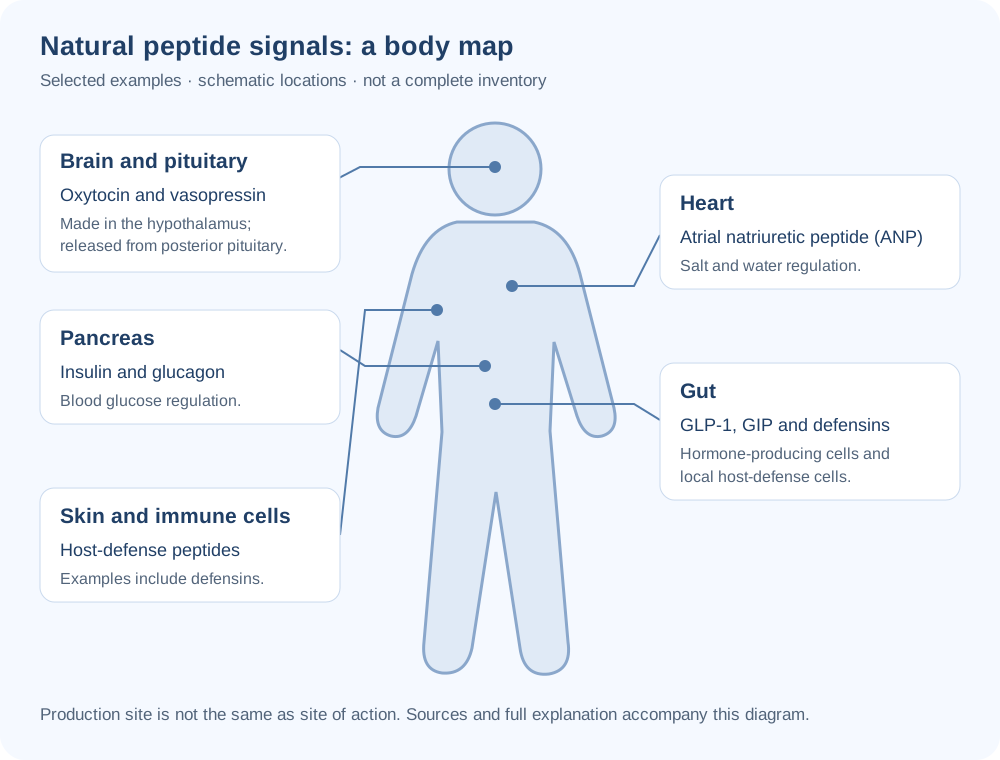
Examples: which peptides are naturally found in the human body?
| Peptide | Important production or release site | Main role in plain language | Evidence and scope |
|---|---|---|---|
| Insulin | Pancreatic beta cells | Helps regulate blood glucose, including helping cells use or store nutrients | Established human physiology; see NIDDK1 |
| Glucagon | Pancreatic alpha cells | Helps the liver supply glucose when it is needed | Human hormone physiology; glucagon physiology10 |
| GLP-1 and GIP | Specialized hormone-producing cells in the gut | Help connect food intake with insulin release | Human incretin physiology; the effect depends on glucose and context2,6 |
| Oxytocin | Hypothalamic neurons; released into blood from the posterior pituitary | Contributes to uterine contraction and milk ejection | Established reproductive physiology; complex brain effects are a separate question3 |
| Vasopressin, also called ADH | Hypothalamic neurons; released into blood from the posterior pituitary | Helps the kidneys conserve water | Established human water-balance physiology3 |
| Atrial natriuretic peptide, or ANP | Heart muscle, especially the atria | Helps regulate salt, water, and blood pressure | A heart-to-kidney signal, not a general-purpose heart treatment4 |
| Defensins | Immune cells and barrier tissues; human defensin-5 is associated with small-intestinal Paneth cells | Contribute to defense against microbes | Tissue and laboratory evidence establishes location and activity; it does not establish a supplement benefit5,9 |
This is an overview of selected peptide functions. It is not a list of compounds to supplement, inject, or “optimize.” For the broader categories, see types of peptides.
How can the same body use so many peptide signals?
The cell making the signal matters
Peptides are built from amino acids. Cells can first make a larger precursor and then cut it into active fragments. Which fragments appear depends on the tissue and its processing enzymes. For example, pancreatic glucagon and intestinal GLP-1 can arise from the same proglucagon precursor through different processing. A common starting molecule does not make the resulting signals interchangeable.2
Production, release, and action are different locations
An insulin-producing cell is in the pancreas, but insulin acts on tissues elsewhere. A gut hormone can communicate with the pancreas. A peptide released into blood can also be broken down before it reaches every possible target. This is why “found in the body” is too broad to explain a peptide's purpose.1,2
Receptors are proteins that receive molecular signals. A cell's response depends on whether it has the relevant receptor and on its current biological state. Read the receptor definition for a simple explanation of this signal-and-receiver relationship.
What research shows: a human example, not a treatment promise
In a foundational 1987 human physiology study, Kreymann and colleagues detected GLP-1-like material in human bowel and observed a rise after oral glucose and a test breakfast. Their infusion experiment involved seven healthy volunteers, comparing GLP-1 with saline on separate occasions in random order. Insulin increased and glucose responses changed under the experimental conditions.6
The study helped establish GLP-1 as an incretin, a gut signal that contributes to the insulin response to food. Its small, short-term experiment did not establish years of weight-loss effectiveness or long-term drug safety. Later clinical research on specific medicines addresses different questions. The original paper, hosted as a PDF by the University of Houston lets readers inspect those methods directly.
This example illustrates an important distinction: identifying a natural signal, testing its immediate effects, and evaluating a manufactured medicine are separate stages of evidence. Use the Evidence Center to understand those stages.
Natural peptide signaling is different from using a peptide medicine
“Natural” describes origin, not safety. A medicine can match a human peptide sequence, modify it, or activate a related receptor. Its formulation, route, exposure, and intended use all matter.
For example, semaglutide is a GLP-1 receptor agonist designed to remain active longer than native GLP-1. It is not simply the gut hormone packaged unchanged. Its clinical claims must be checked against the specific approved product and population, rather than inferred from GLP-1's natural role.7 See the semaglutide evidence dossier and natural versus synthetic peptides.
U.S. regulatory context checked 10 October 2026: FDA approval evaluates a specific medicine and use. The body's production of a related molecule does not confer approval on other products, including those sold as research peptides.8 Our Safety Center explains the difference between normal biology and product-level evidence.
Common misconceptions and remaining questions
- “All peptides are hormones.” Some have local signaling or host-defense roles instead of acting mainly as circulating hormones.3,5
- “The brain is the only place that makes peptides.” The pancreas, gut, heart, immune cells, and other tissues contribute their own peptide signals.1,2,3,4,5,9,10
- “A peptide made by the body must be safe to add.” Natural production is regulated in space and time. A manufactured product still needs evidence about its formulation, benefits, and harms.7,8
- “Detecting a peptide proves what it does.” Detection, receptor experiments, and observed clinical outcomes answer different questions. The small GLP-1 study above demonstrates physiology under defined conditions, not a universal treatment claim.6
The examples here have well-established biological roles, but they do not provide a complete map of the human peptidome, all the peptides present in human tissues. Tissue, timing, disease, measurement methods, and precursor processing can change what researchers detect. Avoid treating a single blood result or a laboratory finding as a complete description of peptide function.
To explore the subject in a structured order, return to the peptide education hub or compare human studies with preclinical research.
References
- NIDDK. What Is Diabetes? Patient explanation of pancreatic insulin and glucose regulation.
- Holst JJ, Gasbjerg LS, Rosenkilde MM. 2021. The Role of Incretins on Insulin Function and Glucose Homeostasis. Endocrinology. DOI: 10.1210/endocr/bqab065. Reference for GIP, GLP-1, glucagon, and tissue-specific precursor processing.
- Endotext, NCBI Bookshelf. The Neurohypophysis: Endocrinology of Vasopressin and Oxytocin. Hypothalamic production, posterior-pituitary release, and physiological roles.
- NCBI Bookshelf. Atrial Natriuretic Peptide. Cardiac secretion and salt/water regulation.
- Ghosh D et al. 2002. Paneth cell trypsin is the processing enzyme for human defensin-5. Nature Immunology. PMID: 12021776. Human tissue and biochemical research, not a therapeutic trial.
- Kreymann B et al. 1987. Glucagon-like peptide-1 7-36: a physiological incretin in man. Lancet. PMID: 2890903. Original study PDF.
- DailyMed / FDA label. Wegovy prescribing information, clinical pharmacology section. Current label checked 10 October 2026 for the molecule's design and mechanism; indications and instructions are product-specific.
- FDA. The Drug Development Process. Product-specific clinical research and regulatory review.
- Harder J et al. 1997. A peptide antibiotic from human skin. Nature. PMID: 9202117. Primary tissue research identifying human beta-defensin-2.
- Endotext, NCBI Bookshelf. Glucagon Physiology. Pancreatic alpha cells and hepatic glucose production.


