
Evidence-Based Summary
Tirzepatide and liraglutide represent two distinct eras of incretin-based metabolic pharmacotherapy. Liraglutide (Victoza, Saxenda) is a first-generation once-daily selective GLP-1 receptor agonist with proven cardiovascular outcomes (LEADER trial) and a decade-long safety track record. Tirzepatide (Mounjaro, Zepbound) is a first-in-class once-weekly dual GIP and GLP-1 receptor co-agonist (twincretin). By engaging the GIP receptor alongside biased GLP-1 receptor signaling, tirzepatide improves insulin sensitivity and adipose tissue lipid buffering, achieving substantially greater reductions in HbA1c (up to 2.3–2.6%) and mean body weight (up to 20.9% in SURMOUNT-1 vs ~8% in SCALE). Both medications carry the FDA Boxed Warning for thyroid C-cell tumors based on rodent findings and share similar gastrointestinal tolerability profiles during dose titration.
Quick Comparison: Tirzepatide vs Liraglutide
A high-level comparison of molecule class, molecular receptor targets, FDA regulatory approvals, and verified clinical programs.
| Feature | Tirzepatide | Liraglutide |
|---|---|---|
| Primary drug class | Dual GIP and GLP-1 receptor agonist (twincretin) | Selective GLP-1 receptor agonist |
| Receptor targets | GIP receptor (GIPR) + GLP-1 receptor (GLP-1R) | GLP-1 receptor (GLP-1R) |
| Molecular architecture | 39-amino-acid peptide; C20 fatty diacid chain at Lys20 | 31-amino-acid peptide; C16 palmitoyl fatty acid at Lys26 |
| Dosing regimen | Once weekly subcutaneous injection | Once daily subcutaneous injection |
| Elimination half-life | ~116 to 120 hours (~5 days) | ~13 hours |
| U.S. Brand names | Mounjaro (T2D injection), Zepbound (obesity injection) | Victoza (T2D injection), Saxenda (obesity injection) |
| Initial FDA approval date | May 2022 (Mounjaro); November 2023 (Zepbound) | January 2010 (Victoza); December 2014 (Saxenda) |
| Mean weight reduction in Phase 3 | Up to 20.9% (SURMOUNT-1, 15 mg) | Approximately 8.0% (SCALE, 3.0 mg) |
| Cardiovascular risk indication in label | Pending completion of definitive SURPASS-CVOT trial | Approved (LEADER trial; T2D with high cardiovascular risk) |
| FDA Boxed Warning | Risk of thyroid C-cell tumors (rodent data) | Risk of thyroid C-cell tumors (rodent data) |
Dual Incretin Activation vs Selective GLP-1 Stimulation
While liraglutide relies exclusively on the GLP-1 pathway, tirzepatide integrates GIP receptor engagement to enhance metabolic flexibility.
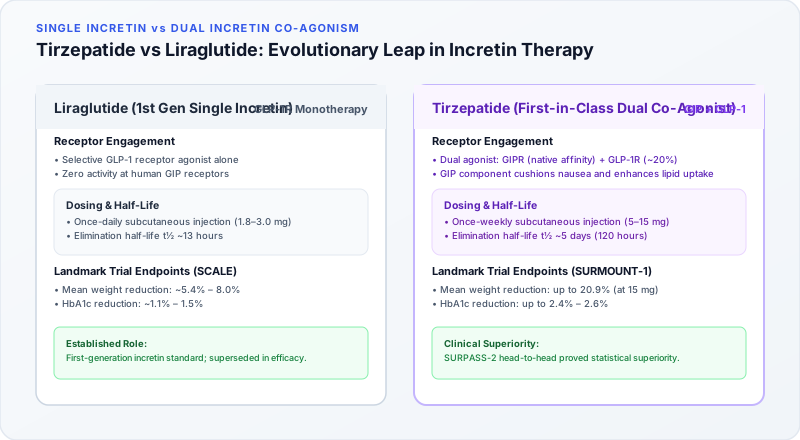
Tirzepatide: Dual Receptor Agonism with Biased Transduction
Primary Target: GIPR + GLP-1R (Dual Agonist)
Affinity Profile: Native-like affinity for GIPR; ~5-fold weaker affinity for GLP-1R with biased signaling
Tirzepatide binds with equal affinity to native GIP at the GIP receptor, while exhibiting functional selectivity at the GLP-1 receptor, favoring cyclic AMP generation over β-arrestin recruitment. This biased signaling reduces receptor internalization, allowing sustained insulinotropic action. Simultaneously, GIP receptor engagement in adipose tissue increases blood flow, enhances postprandial triglyceride clearance, improves insulin sensitivity, and synergizes with central GLP-1 pathways to suppress hunger.
Liraglutide: Classic GLP-1 Receptor Transduction
Primary Targets: GLP-1R (Single Target)
Affinity Profile: High selectivity and affinity for human GLP-1R
Liraglutide acts exclusively via the GLP-1 receptor on pancreatic β-cells, stimulating Gαs and adenylate cyclase to increase cAMP and enhance glucose-dependent insulin secretion. It inhibits glucagon release from α-cells during hyperglycemia and delays gastric emptying. In the hypothalamus and hindbrain, it activates POMC neurons to diminish appetite, requiring daily administration to sustain therapeutic plasma concentrations.
FDA Formulations and Approved Indications
Both therapies hold full FDA approvals for type 2 diabetes and chronic weight management.
Tirzepatide Status & Formulations
Mounjaro (Tirzepatide Injection)
Approval History: 2022 (NDA 215866)
Approved Indications: Adjunct to diet and exercise to improve glycemic control in adults with type 2 diabetes mellitus
View Regulatory PackageZepbound (Tirzepatide Injection)
Approval History: 2023 (NDA 217806)
Approved Indications: Chronic weight management in adults with obesity (BMI ≥30) or overweight (BMI ≥27) with at least one weight-related condition
View Regulatory PackageLiraglutide Status & Formulations
Victoza (Liraglutide Injection)
Approval History: 2010 (NDA 022341)
Approved Indications: Type 2 diabetes glycemic control in patients aged 10+; MACE cardiovascular risk reduction in adults with T2D and established CVD
View Regulatory PackageSaxenda (Liraglutide Injection)
Approval History: 2014 (NDA 206321)
Approved Indications: Chronic weight management in adults and pediatric patients aged 12+ with obesity
View Regulatory PackageCritical Regulatory Distinction
A major regulatory difference is that Victoza carries a proven MACE risk reduction claim on its label based on LEADER, whereas tirzepatide’s dedicated cardiovascular outcome trial (SURPASS-CVOT) is ongoing.
Comparative Phase 3 Clinical Programs
Cross-trial comparisons reveal substantial differences in therapeutic efficacy endpoints.
Tirzepatide: Tirzepatide: SURPASS & SURMOUNT
Across the SURPASS (T2D) and SURMOUNT (obesity) clinical programs, tirzepatide demonstrated dose-dependent reductions in HbA1c up to 2.6% and average body weight reductions of 15.0% to 20.9% at the highest 15 mg weekly dose, setting new benchmarks in medical weight management.
Liraglutide: Liraglutide: LEAD, SCALE & LEADER
Liraglutide’s SCALE program established an 8.0% mean weight reduction in adults with obesity. In the landmark LEADER trial, liraglutide demonstrated a 13% reduction in the composite endpoint of cardiovascular death, nonfatal myocardial infarction, or nonfatal stroke in patients with T2D.
Comparative Safety, Tolerability & Warnings
Both medications share the gastrointestinal adverse effect class profile typical of incretin mimetics.
Risk of Thyroid C-Cell Tumors (Class Boxed Warning)
Both tirzepatide and liraglutide carry an FDA Boxed Warning regarding dose-dependent thyroid C-cell tumors observed in rodents. Both medications are contraindicated in patients with personal or family history of medullary thyroid carcinoma or Multiple Endocrine Neoplasia syndrome type 2.
| Safety Consideration | Tirzepatide | Liraglutide |
|---|---|---|
| Most frequent adverse effects | Nausea, diarrhea, decreased appetite, vomiting, constipation | Nausea, diarrhea, constipation, vomiting, headache |
| Pancreatitis precaution | Discontinue if pancreatitis is suspected (<0.2% in trials) | Discontinue if pancreatitis is suspected (<0.3% in trials) |
| Hypoglycemia risk (monotherapy) | Low (glucose-dependent insulin secretion) | Low (glucose-dependent insulin secretion) |
| Oral Contraceptive Interaction | Advise non-oral or barrier contraception for 4 weeks post-initiation/dose escalation | No specific barrier contraception instruction in labeling |
| Dosing burden | Once weekly (52 injections per year) | Once daily (365 injections per year) |
Specific Drug Interaction Note
Because tirzepatide delays gastric emptying significantly during initial dose escalation, systemic exposure to oral contraceptives can be decreased. The FDA label recommends switching to a non-oral contraceptive method or adding a barrier method for 4 weeks after initiation and after each dose increase.
What Tirzepatide and Liraglutide Have in Common
Where the two compounds overlap in biology, evidence or regulatory context.
Incretin System Stimulation
Both therapies exploit the gut incretin axis to enhance nutrient-dependent insulin release and promote early meal termination.
Approved for T2D & Obesity
Both molecules have received FDA marketing authorization for both type 2 diabetes glycemic control and chronic weight management.
Gastrointestinal Tolerability Profile
Nausea, diarrhea, vomiting, and constipation represent the most common adverse reactions for both drugs, primarily during dose titration.
Class Boxed Warning
Both carry the thyroid C-cell tumor boxed warning and are contraindicated in patients with personal or family history of MTC.
Key Scientific & Clinical Differences
Meaningful distinctions in mechanism, strength of evidence, safety and regulatory status.
Single vs Dual Receptor Targets
Liraglutide activates only the GLP-1 receptor; tirzepatide co-activates both the GIP receptor and the GLP-1 receptor.
Dosing Frequency & Half-Life
Tirzepatide is injected once weekly (~5 day half-life); liraglutide is injected once daily (~13 hour half-life).
Magnitude of Weight Reduction
Phase 3 trials show tirzepatide achieves up to 20.9% mean weight loss at 15 mg, compared to approximately 8% with liraglutide 3.0 mg.
Proven Cardiovascular Outcomes in Label
Liraglutide has an approved MACE risk reduction indication from the LEADER trial; tirzepatide’s SURPASS-CVOT trial is still ongoing.
Scientific Comparison vs Clinical Recommendations
Inside Peptides compares scientific evidence, receptor pharmacology, and official regulatory documents to advance public and professional understanding. We do not determine which compound is appropriate for an individual patient, rank medications with arbitrary scores, or recommend initiating or switching treatments.
Decisions about any medicine require a licensed healthcare professional who can weigh personal medical history, contraindications, interactions and monitoring needs. Unapproved peptides have no established safe use, and products sold as “research chemicals” are not the preparations studied in clinical research.
Approved Uses vs Online Claims
A critical scientific distinction between verified, FDA-approved clinical uses and unverified claims circulating on social media and vendor platforms.
Tirzepatide completely replaces Liraglutide with no reason to ever use the latter
insufficientLiraglutide remains an established, approved medication.
While tirzepatide offers greater efficacy and weekly convenience, liraglutide provides shorter half-life flexibility, generic cost advantages in some healthcare markets, and proven long-term cardiovascular safety data.
Tirzepatide causes permanent gastroparesis in all patients
insufficientDelayed gastric emptying is an expected pharmacological effect, not permanent paralysis.
Slowed gastric emptying is an intrinsic mechanism of incretin therapies that tends to attenuate over chronic administration. Severe gastrointestinal dysmotility is rare and monitored clinically.
Evidence Strength Across Clinical Domains
Inside Peptides evaluates scientific certainty at the claim level. Because clinical evidence varies significantly depending on the therapeutic endpoint evaluated, each domain is assessed independently.
Glycemic Control in Type 2 Diabetes
High certainty for both drugs in extensive Phase 3 programs; tirzepatide yields greater mean HbA1c reductions.
Chronic Weight Reduction
High certainty for both; tirzepatide demonstrates substantially greater percentage weight loss.
Cardiovascular Risk Reduction (T2D)
Liraglutide has proven MACE benefit in LEADER; tirzepatide definitive CVOT trial remains pending.
Long-Term Safety Experience (>10 Years)
Liraglutide has over a decade of real-world post-marketing safety data; tirzepatide was approved in 2022.
What Research Still Doesn’t Tell Us
Identifying open scientific questions, pending active-comparator trials, and areas where long-term clinical data remain incomplete.
Head-to-Head Comparative Trial
While tirzepatide has been compared directly with semaglutide (SURPASS-2) and insulin glargine (SURPASS-4), no direct head-to-head randomized trial has compared tirzepatide against liraglutide.
Definitive Cardiovascular Outcome Data for Tirzepatide
The SURPASS-CVOT trial is evaluating tirzepatide vs dulaglutide for non-inferiority and superiority regarding MACE endpoints; definitive published results are awaited.
Long-Term GIP Receptor Signaling Implications
The chronic physiological effects of sustained GIP receptor agonism over multiple decades on bone mineral density and adipose biology continue to be investigated.
Related Compound Profiles
Individual profiles provide full molecular datasheets, CAS numbers, preclinical histories, and compound monographs.
Related Educational Resources
Scientific & Regulatory References
Every pharmacological mechanism, clinical trial result, and regulatory approval cited on this page is traceable to official FDA prescribing documentation, ClinicalTrials.gov registries, or peer-reviewed medical publications.
-
Peer-Reviewed Clinical Trial
Tirzepatide Once Weekly for the Treatment of Obesity (SURMOUNT-1)
-
Peer-Reviewed Clinical Trial
A Randomized, Controlled Trial of 3.0 mg of Liraglutide in Weight Management (SCALE)
-
Peer-Reviewed Clinical Trial
Liraglutide and Cardiovascular Outcomes in Type 2 Diabetes (LEADER)
-
Peer-Reviewed Clinical Trial
Tirzepatide versus Semaglutide Once Weekly in Patients with Type 2 Diabetes (SURPASS-2)