

Field Summary & Status
Preclinical EvidenceThe Wound Healing Cascade & Translational Gaps
Tissue repair is a conserved biological process proceeding through four overlapping phases: hemostasis, inflammation, proliferation, and tissue remodeling. Peptide signaling factors coordinate the recruitment of inflammatory leukocytes, stimulate angiogenesis, and induce fibroblasts to synthesize extracellular matrix components.
A profound translational gap divides animal rodent laceration models from human clinical orthopedics. Preclinical compounds like BPC-157 and TB-500 have generated widespread consumer interest based on rodent tendon and muscle assays, yet neither has demonstrated reproducible efficacy in blinded Phase 3 human randomized trials.
Clinical development in tissue repair is complicated by the complexity of human chronic injuries: unlike healthy young rats with acute surgical incisions, human patients present with degenerative tendinopathies, microvascular compromise, and chronic systemic inflammation.
Biological Systems & Signaling Mechanisms
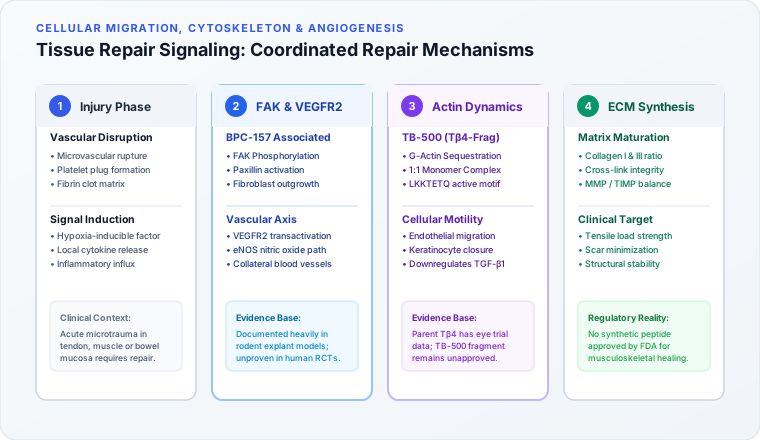
Wound repair requires coordinated molecular communication between extracellular matrix scaffolds and cellular surface receptors.
Angiogenesis & Capillary Sprouting
Upregulation of VEGF and basic fibroblast growth factor (bFGF) induces endothelial cell proliferation and lumen formation in ischemic tissue beds.
Preclinical Model
Collagen Synthesis & Matrix Deposition
Modulation of TGF-beta1/Smad signaling regulates the synthesis of Type I vs Type III collagen, determining scar elasticity vs tensile strength.
In Vitro Assay
Actin Cytoskeletal Dynamics
G-actin sequestering peptides (Thymosin beta-4 fragments) maintain an unpolymerized actin pool necessary for directed cell lamellipodia migration.
Biochemistry
Peptide Classes & Molecular Targets
Compounds under investigation in tissue regeneration span synthetic gastric fragments, thymic peptides, and copper complexes.
Synthetic Cytoprotective Fragments
Target: BPC-157 (PL 14736)Pentadecapeptides derived from gastric juice proteins (BPC-157) evaluated for mucosal and tendon healing.
Actin-Sequestering Thymic Heptapeptides
Target: TB-500, RGN-259Peptides derived from Thymosin Beta-4 containing the LKKTETQ actin-binding hairpin.
Metal-Chelating Tripeptides
Target: GHK-Cu, Copper Tripeptide-1Endogenous plasma peptides with high copper affinity (GHK-Cu) that stimulate dermal matrix metalloproteinase balance.
Human Clinical Trials & Observational Data
Controlled human trials in tissue regeneration are scarce and restricted predominantly to topical or localized formulations.
| Trial / Study | Identifier / Compound | Phase & Cohort | Status / Duration | Primary Findings |
|---|---|---|---|---|
| SEER-1: RGN-259 Ophthalmic Solution for Neurotrophic Keratopathy |
SEER-1: RGN-259 Ophthalmic Solution for Neurotrophic Keratopathy
NCT02600429
|
Phase 3
18 patients with neurotrophic keratopathy
|
Terminated |
Topical Tβ4 ophthalmic formulation evaluated for corneal epithelial healing; the trial was terminated early for a business decision and results were posted to ClinicalTrials.gov in 2023.
Published 2023
|
Approved Medicines vs. Investigational Compounds
Clear distinction between regulatory-approved prescription medicines and experimental candidates undergoing laboratory or early clinical testing.
| Compound | Target / Mechanism | Regulatory Status | Indications / Focus | Sponsor / Developer |
|---|---|---|---|---|
| Becaplermin (Regranex) | Approved Biological Target | FDA/EMA Approved (1997) | Diabetic Neuropathic Foot Ulcers | Smith & Nephew (Recombinant PDGF) |
| BPC-157 | Putative VEGFR2 / FAK signaling modulation | Preclinical / Unapproved | Preclinical / Investigational | DiGenova / Academic |
| RGN-259 (Thymosin β4) | Actin sequestering & epithelial migration | Phase 3 (Topical Eye) | Preclinical / Investigational | RegeneRx |
Safety Realities & Uncharacterized Risks
Because research tissue peptides stimulate angiogenesis and cell migration, long-term systemic safety requires rigorous scrutiny.
Oncological / Neo-angiogenesis Concerns
Theoretical / SevereUnchecked stimulation of VEGF signaling and capillary proliferation carries theoretical concerns for occult tumor growth.
Chemical Impurities in Unregulated Products
Moderate to HighGray-market research chemicals frequently contain synthesis truncation fragments, trifluoroacetate salts, and bacterial endotoxins.
Immunogenicity & ADA Formation
ModerateSynthetic peptides can provoke anti-drug antibody formation that may cross-react with endogenous tissue factors.
Unresolved Scientific Questions
Key mechanistic and translational questions currently under active scientific investigation.
Does systemic injection reach musculoskeletal target tissues intact?
Pharmacokinetic proof demonstrating that intact BPC-157 or TB-500 survives blood peptidases to concentrate inside avascular tendons remains missing.
What is the true human dose-response relationship?
Current recreational dosing protocols are derived entirely from allometric animal scaling without Phase 1 human PK verification.
Evolution of Research & Milestones
Historical scientific breakthroughs, isolation events, structural discoveries, and regulatory milestones.
Thymosin Beta-4 Isolated
Goldstein isolates full-length Tβ4 from bovine thymus.
BPC-157 First Described
Sikiric and colleagues report gastric mucosal protection in rodent models.
FDA Safety Alerts Reaffirmed
FDA maintains BPC-157 and related unapproved research peptides under Section 503A safety risk notices.
Scientific References
Primary scientific publications, randomized controlled trials, and clinical consensus papers referenced in this field overview.
-
GHK peptide as a natural modulator of multiple cellular pathways in skin regeneration BioMed Res Int · 2015
Scientific & Educational Disclaimer
InsidePeptides.org provides scientific and educational analysis of peer-reviewed research for informational purposes only. This overview does not constitute medical advice, diagnosis, treatment, prescription, or clinical guidance. Incretin and metabolic peptide medicines require physician oversight, prescription authorization, and regular clinical monitoring. Never adjust, initiate, or discontinue prescribed treatments without direct consultation with a qualified medical specialist.