
Field Summary & Status
Early Human EvidenceNeurochemical Modulators & Synaptic Plasticity
Neuropeptides represent one of the most chemically diverse classes of signaling molecules in the central and peripheral nervous systems. Unlike classical small-molecule neurotransmitters (such as glutamate or GABA) which are synthesized in axon terminals and stored in small clear synaptic vesicles, neuropeptides are synthesized as prohormones in neuronal cell bodies and packaged into large dense-core vesicles (LDCVs).
Neuropeptides act predominantly as slow, neuromodulatory signals that tune neural circuit excitability, promote dendritic arborization, and regulate behavioral states such as anxiety, bonding, appetite, and wakefulness.
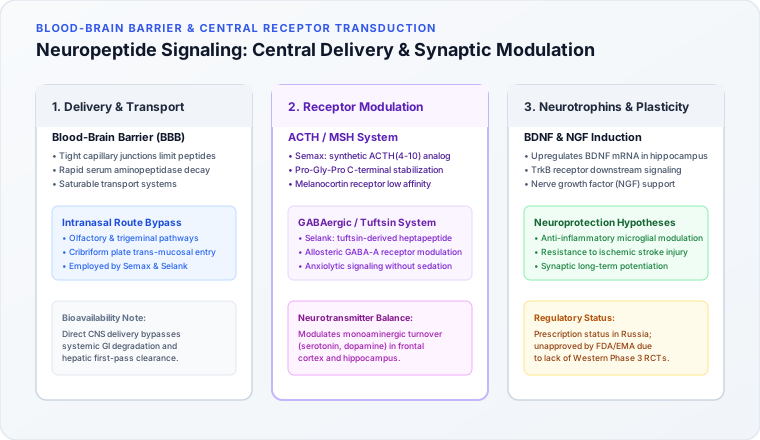
Clinical translation in Western medicine is severely bottlenecked by the blood-brain barrier (BBB). While compounds like Semax and Selank gained regulatory registration in Russia via intranasal delivery, Western regulatory agencies require confirmatory double-blind Phase 3 trials before granting approval.
Biological Systems & Signaling Mechanisms
Central neuropeptide signaling operates through specialized neurotrophic and allosteric receptor interactions.
TrkB / BDNF Neurotrophic Cascade
Upregulation of brain-derived neurotrophic factor (BDNF) mRNA and receptor tyrosine kinase B (TrkB) activation promotes neuronal survival.
Preclinical Model
Allosteric GABAergic Modulation
Modulation of GABA-A receptor sensitivity enhances inhibitory neurotransmission without classical benzodiazepine sedation.
Electrophysiology
Enzymatic Peptidase Inhibition
Stabilizing sequences (Pro-Gly-Pro tails) delay cleavage of endogenous enkephalins and neuropeptides by brain membrane peptidases.
Biochemistry
Peptide Classes & Molecular Targets
Neuropeptides span endogenous neurohypophysial hormones, ACTH analogues, and tuftsin-derived peptides.
ACTH-Derived Neurotrophic Analogues
Target: SemaxHeptapeptides based on ACTH(4-7) with C-terminal stabilization designed to induce neuroprotection.
Tuftsin-Derived Anxiolytics
Target: Selank (TP-7)Peptides derived from the immunomodulatory tetrapeptide tuftsin engineered for GABAergic modulation.
Neurohypophysial Nonapeptides
Target: Oxytocin, VasopressinEndogenous nonapeptides governing social cognition, uterine tone, and osmoregulation.
Human Clinical Trials & Observational Data
Clinical investigations focus on acute stroke neuroprotection, cognitive impairment, and generalized anxiety.
| Trial / Study | Identifier / Compound | Phase & Cohort | Status / Duration | Primary Findings |
|---|---|---|---|---|
| Semax at Different Stages of Ischemic Stroke Rehabilitation |
Semax at Different Stages of Ischemic Stroke Rehabilitation
RU-CT2018
|
Controlled clinical study (Semax vs no Semax subgroups)
110 patients after ischemic stroke, in early or late rehabilitation
|
Completed |
Semax subgroups showed higher plasma BDNF levels and faster, better recovery on the Barthel index; effects on paresis were smaller.
Published 2018
|
| Selank vs Medazepam in Generalized Anxiety |
Selank vs Medazepam in Generalized Anxiety
RU-CT2008
|
Active-comparator clinical study
62 patients with generalized anxiety disorder or neurasthenia (30 selank, 32 medazepam)
|
Completed |
Anxiolytic effects of selank and medazepam were similar on Hamilton, Zung and CGI scales; selank also showed antiasthenic and psychostimulant effects.
Published 2008
|
Approved Medicines vs. Investigational Compounds
Clear distinction between regulatory-approved prescription medicines and experimental candidates undergoing laboratory or early clinical testing.
| Compound | Target / Mechanism | Regulatory Status | Indications / Focus | Sponsor / Developer |
|---|---|---|---|---|
| Oxytocin (Pitocin) | Approved Biological Target | FDA/EMA Approved (1955) | Labor Induction & PPH | Multiple Manufacturers |
| Desmopressin (DDAVP) | Approved Biological Target | FDA/EMA Approved (1978) | Diabetes Insipidus & Nocturnal Enuresis | Ferring |
| Semax | BDNF upregulation & ischemic neuroprotection | Russian Approved / Western Unapproved | Preclinical / Investigational | Peptogen |
| Selank | GABA-A allosteric modulation | Russian Approved / Western Unapproved | Preclinical / Investigational | Peptogen |
Safety Considerations & Blood-Brain Transport Risks
Modulating central neurotransmission requires careful evaluation of psychiatric tolerability and nasal mucosa integrity.
Central Nervous System Tolerability
Mild to ModerateTransient headache, sleep disturbances, and paradoxical agitation reported with unmonitored neuropeptide dosing.
Lack of Western Regulatory Oversight
Moderate to HighImported or gray-market neuropeptide solutions lack audited sterility testing and HPLC characterization.
Unresolved Scientific Questions
Key mechanistic and translational questions currently under active scientific investigation.
How much intact peptide crosses the human blood-brain barrier via nasal delivery?
Quantitative human PET radiotracer studies demonstrating direct olfactory-to-brain uptake remain sparse.
Can Russian clinical trial results be reproduced in double-blind Western Phase 3 trials?
Confirmatory multi-center Western trials using modern placebo-controlled protocols have not been completed.
Evolution of Research & Milestones
Historical scientific breakthroughs, isolation events, structural discoveries, and regulatory milestones.
Oxytocin Synthesized
Du Vigneaud completes synthesis of the first neuropeptide hormone.
Semax Engineered
Russian Academy of Sciences synthesizes ACTH(4-7)-PGP.
Current Status
Neuropeptides remain under evaluation for traumatic brain injury and neurodegeneration.
Scientific References
Primary scientific publications, randomized controlled trials, and clinical consensus papers referenced in this field overview.
-
The efficacy of semax in the treatment of patients at different stages of ischemic stroke Zh Nevrol Psikhiatr · 2018
-
Efficacy and possible mechanisms of action of a new peptide anxiolytic selank in the therapy of generalized anxiety disorders and neurasthenia Zh Nevrol Psikhiatr · 2008
-
Semax, an analog of ACTH(4-10) with cognitive effects, regulates BDNF and trkB expression in the rat hippocampus Brain Res · 2006
Scientific & Educational Disclaimer
InsidePeptides.org provides scientific and educational analysis of peer-reviewed research for informational purposes only. This overview does not constitute medical advice, diagnosis, treatment, prescription, or clinical guidance. Incretin and metabolic peptide medicines require physician oversight, prescription authorization, and regular clinical monitoring. Never adjust, initiate, or discontinue prescribed treatments without direct consultation with a qualified medical specialist.