
GLP-1 Drugs Beyond Weight Loss: What’s Proven, Promising or Failed
Which GLP-1 uses are proven? Heart, kidney, liver and sleep apnea approvals, promising trials, and the Alzheimer’s and Parkinson’s results that failed.

Key takeaways
- Approved uses now include cardiovascular risk, kidney disease in type 2 diabetes, MASH and sleep apnea, each for specific products and patients.
- Heart failure, knee osteoarthritis and peripheral artery disease have positive trials but no US indication.
- Large Alzheimer's trials failed, a phase 3 Parkinson's trial was negative, and alcohol use disorder evidence is early.
In this article
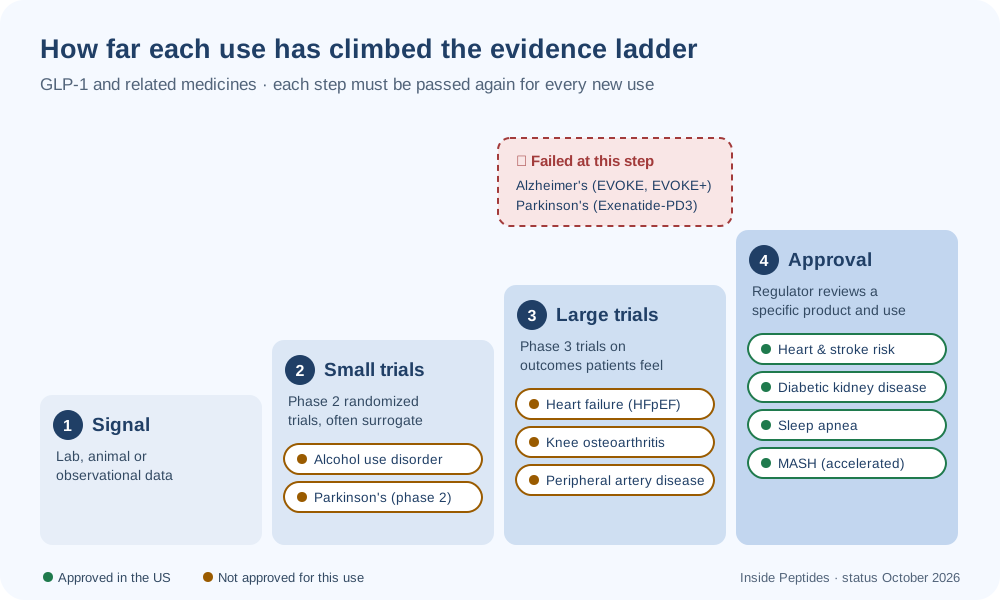
GLP-1 medicines now have FDA-approved uses well beyond weight loss and blood sugar: lowering heart-attack and stroke risk, slowing kidney disease in type 2 diabetes, treating a serious form of fatty liver disease, and treating obstructive sleep apnea. But not every hopeful headline has held up. Two large Alzheimer's trials failed, a phase 3 Parkinson's trial was negative, and the evidence for alcohol use disorder is still early. This scorecard sorts each use by the strength of the evidence and its regulatory status as of 12 October 2026.
It describes research and regulatory decisions only. It is not medical advice and gives no dosing information. An approval covers a specific product, population and use, so read each row as exactly that.
The scorecard at a glance
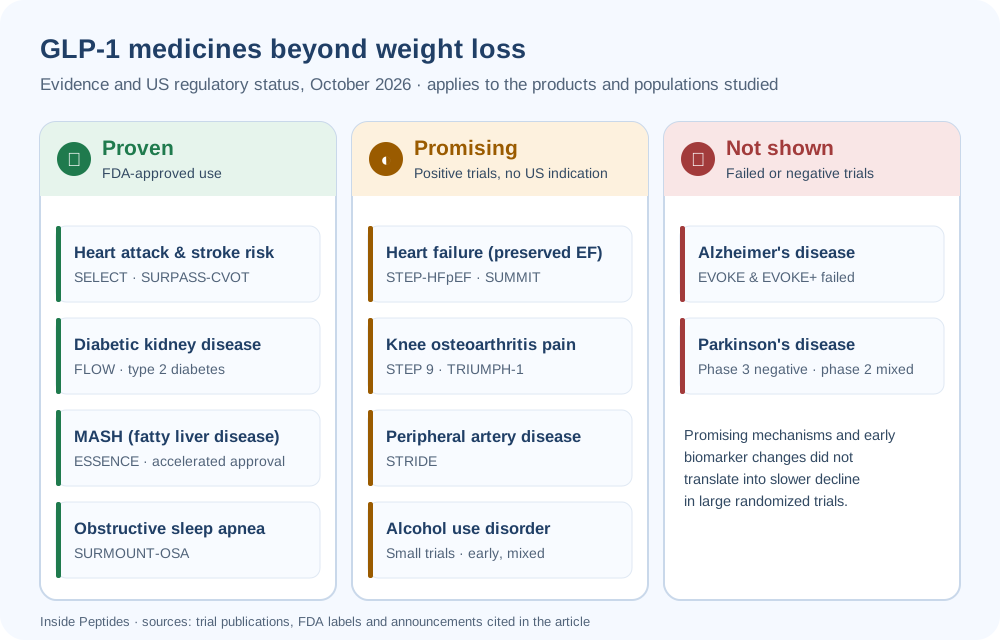
| Condition | Best evidence | Status (US, October 2026) |
|---|---|---|
| Heart attack, stroke and cardiovascular death | SELECT (semaglutide), SURPASS-CVOT (tirzepatide) | Approved for specified adults1,2,3,4 |
| Kidney disease in type 2 diabetes | FLOW (semaglutide) | Approved (Ozempic)56 |
| MASH, a serious fatty liver disease | ESSENCE (semaglutide) | Accelerated approval (Wegovy); confirmation pending78 |
| Obstructive sleep apnea with obesity | SURMOUNT-OSA (tirzepatide) | Approved (Zepbound)910 |
| Heart failure with preserved ejection fraction | STEP-HFpEF, SUMMIT | Positive trials; no US indication1112 |
| Knee osteoarthritis pain | STEP 9, TRIUMPH-1 subgroup | Positive trials; no US indication1314 |
| Peripheral artery disease | STRIDE (semaglutide) | Positive trial; EU recommendation; no US indication15 |
| Alcohol use disorder | Small RCTs; one phase 2 readout | Early and mixed2021 |
| Parkinson's disease | LIXIPARK, Exenatide-PD3 | Mixed; phase 3 negative1819 |
| Alzheimer's disease | EVOKE and EVOKE+ | Failed1617 |
"Approved" means a regulator reviewed trial evidence for a named product and use. It does not mean every GLP-1 medicine, or any compounded or "research" product, has that use. See what FDA approval means.
Proven: approved uses beyond weight and glucose
Heart attack and stroke risk
SELECT randomized 17,604 adults with established cardiovascular disease and overweight or obesity, without diabetes, to semaglutide or placebo. The combined rate of cardiovascular death, non-fatal heart attack or non-fatal stroke was 6.5% with semaglutide and 8.0% with placebo, a hazard ratio of 0.80 (95% CI 0.72 to 0.90).1 In March 2024 the FDA approved Wegovy to reduce that risk in adults with established cardiovascular disease and either obesity or overweight, the first weight-loss medicine with that indication.2
SURPASS-CVOT compared tirzepatide with dulaglutide, an older GLP-1 medicine, in more than 13,000 adults with type 2 diabetes and atherosclerotic cardiovascular disease. Major cardiovascular events occurred in 12.2% versus 13.1% (HR 0.92; 95.3% CI 0.83 to 1.01). Tirzepatide met the test for non-inferiority but was not shown to be superior.3 In late August 2026 the FDA added a cardiovascular risk-reduction indication to the Mounjaro label for adults with type 2 diabetes at high risk of these events.4
Kidney disease in type 2 diabetes
FLOW enrolled 3,533 people with type 2 diabetes and chronic kidney disease. Semaglutide reduced a composite of kidney failure, a sustained 50% or greater fall in kidney function, and kidney or cardiovascular death by 24% versus placebo (HR 0.76; 95% CI 0.66 to 0.88).5 The FDA approved Ozempic for this use on 28 January 2025.6
MASH: fatty liver disease with scarring
Metabolic dysfunction-associated steatohepatitis (MASH) is liver inflammation that can progress to scarring and cirrhosis. In part 1 of ESSENCE, 800 adults with MASH and moderate-to-advanced fibrosis had liver biopsies at week 72. Steatohepatitis resolved without worsening fibrosis in 62.9% on semaglutide versus 34.3% on placebo. Fibrosis improved without worsening steatohepatitis in 36.8% versus 22.4%.7
The FDA granted Wegovy accelerated approval for this use in August 2025.8 Accelerated approval rests on a surrogate endpoint, here biopsy findings, so continued approval depends on the ongoing outcomes part of the trial showing fewer real clinical events such as cirrhosis. Read our guide to surrogate endpoints and study limitations.
Other peptides are behind it. Tirzepatide (SYNERGY-NASH) and the glucagon/GLP-1 agonist survodutide improved MASH in phase 2 biopsy trials, but neither has a MASH indication.2223
Obstructive sleep apnea
The two SURMOUNT-OSA trials enrolled adults with obesity and moderate-to-severe obstructive sleep apnea. They started with an average of about 50 breathing interruptions an hour, measured as the apnea-hypopnea index (AHI). After 52 weeks, tirzepatide reduced AHI by about 20 to 24 more events per hour than placebo.9 On 20 December 2024 the FDA approved Zepbound for this condition. The agency described it as "the first drug treatment option for certain patients with obstructive sleep apnea."10
Promising: positive trials, no US indication yet
Heart failure with preserved ejection fraction
In STEP-HFpEF, semaglutide improved a patient-reported heart-failure symptom score (KCCQ) by 7.8 points more than placebo in people with obesity.11 In SUMMIT, tirzepatide lowered a combined outcome of cardiovascular death or worsening heart failure (9.9% vs 15.3%; HR 0.62). That result was driven by heart-failure events. There were too few cardiovascular deaths to show a difference.12 Neither the US Wegovy nor the US Zepbound label includes a heart-failure indication as of October 2026.
Knee osteoarthritis
STEP 9 studied adults with obesity and painful knee osteoarthritis. Semaglutide reduced WOMAC pain scores more than placebo over 68 weeks.13 In the peer-reviewed TRIUMPH-1 trial of the investigational triple agonist retatrutide, a knee-osteoarthritis subgroup also reported less pain than with placebo.14 Lower body weight probably explains much of the benefit, and no GLP-1 medicine has a US osteoarthritis indication.
Peripheral artery disease
STRIDE enrolled people with type 2 diabetes and peripheral artery disease that causes leg pain when walking. Semaglutide increased maximum walking distance by an estimated 13% relative to placebo at one year (ratio 1.13; 95% CI 1.06 to 1.21).15 European regulators recommended a label update in 2025. We found no corresponding change to the US Ozempic label as of October 2026.
Failed or unproven
Alzheimer's disease: two large trials failed
Observational data and laboratory work had raised hopes that semaglutide might slow dementia. EVOKE and EVOKE+ tested oral semaglutide in 3,808 people with early Alzheimer's disease over two years. Neither trial slowed decline on the main clinical rating scale (CDR-SB). The authors concluded that oral semaglutide "was not efficacious in slowing clinical progression".16 Novo Nordisk reported that improvements in some biomarkers "did not translate into a delay of disease progression."17
This is a clear example of why biomarkers and observational studies cannot replace randomized trials that measure what patients experience.
Parkinson's disease: mixed, with a negative phase 3
LIXIPARK, a 156-person phase 2 trial of lixisenatide, found slightly less worsening of motor symptoms at 12 months, but nausea affected almost half of participants.19 The larger phase 3 Exenatide-PD3 trial found "no evidence to support exenatide as a disease-modifying treatment".18 No GLP-1 medicine is approved for Parkinson's disease.
Alcohol use disorder: early signals only
The evidence here is small and inconsistent:
- A 48-person randomized trial found that semaglutide reduced the amount of alcohol consumed in a laboratory session and reduced craving. It did not change the number of drinking days.20
- An earlier exenatide trial missed its main goal of reducing heavy drinking days.20
- In July 2026, Altimmune reported that pemvidutide, a GLP-1/glucagon agonist, reduced heavy drinking days compared with placebo in a phase 2 trial of about 100 people. That is a company announcement and has not been peer-reviewed.21
Large observational studies associate GLP-1 use with less alcohol use, but they cannot rule out other explanations. Larger randomized trials are needed before this becomes a treatment.
Safety does not stop at the indication
The FDA labels for these medicines carry the same core warnings whatever they are used for24:
- Boxed warning: thyroid C-cell tumors in rodents. It is unknown whether these medicines cause them in humans.
- Acute pancreatitis, including rare severe cases.
- Gallbladder disease, such as gallstones.
- Pulmonary aspiration: rare reports during general anesthesia or deep sedation. Tell the care team you take one before any procedure.
Two safety questions have moved on since earlier headlines:
- Suicidal thoughts. In January 2026 the FDA asked manufacturers to remove the suicidal behavior and ideation warning from Wegovy, Zepbound and Saxenda. Its review of 91 placebo-controlled trials and a large real-world study found that "the totality of these studies does not support a causal relationship."25
- NAION, a rare cause of sudden vision loss. In June 2025 the EMA's safety committee concluded that NAION is a "very rare side effect" of semaglutide, affecting up to 1 in 10,000 people.26
Read our full guide to semaglutide and tirzepatide, or compare them with the GLP-1 drug comparison tool.
What this means for you
- Ask what the evidence was for, not just which drug. A benefit shown for semaglutide in people with diabetes and kidney disease cannot be assumed for a different drug or population.
- A failed trial is real information. EVOKE shows that a plausible mechanism and promising early data do not guarantee benefit.
- Approvals cover approved products only. Compounded or "research use only" versions were not tested in these trials. See approved versus unapproved peptides.
- Discuss any change with a licensed clinician, especially if you have heart, kidney, liver or eye conditions.
Frequently asked questions
Do GLP-1 drugs prevent heart attacks?
In SELECT, semaglutide lowered the combined risk of cardiovascular death, heart attack and stroke by about 20% in adults with existing cardiovascular disease and overweight or obesity. Wegovy is FDA-approved for that use in that population.12
Are GLP-1 drugs approved for fatty liver disease?
Wegovy has accelerated approval for adults with MASH and moderate-to-advanced liver fibrosis, without cirrhosis. Continued approval depends on confirmatory outcome results.78
Can semaglutide treat Alzheimer's disease?
No. The EVOKE and EVOKE+ trials found no slowing of clinical decline.16
Do GLP-1 drugs treat alcohol addiction?
Not yet. Small trials show mixed signals, and no GLP-1 medicine is approved for alcohol use disorder.2021
References
- Lincoff AM et al. 2023. Semaglutide and Cardiovascular Outcomes in Obesity without Diabetes. New England Journal of Medicine 389:2221–2232. PMID: 37952131. DOI: 10.1056/NEJMoa2307563. SELECT; NCT03574597.
- FDA. FDA Approves First Treatment to Reduce Risk of Serious Heart Problems Specifically in Adults with Obesity or Overweight. 8 March 2024.
- Nicholls SJ et al. 2025. Cardiovascular Outcomes with Tirzepatide versus Dulaglutide in Type 2 Diabetes. New England Journal of Medicine 393:2409. PMID: 41406444. DOI: 10.1056/NEJMoa2505928. SURPASS-CVOT; NCT04255433.
- DailyMed / FDA label. Mounjaro prescribing information. Cardiovascular risk-reduction indication; label version published 2 September 2026. Checked 12 October 2026.
- Perkovic V et al. 2024. Effects of Semaglutide on Chronic Kidney Disease in Patients with Type 2 Diabetes. New England Journal of Medicine 391:109–121. PMID: 38785209. DOI: 10.1056/NEJMoa2403347. FLOW; NCT03819153.
- FDA. Drugs@FDA: Ozempic (NDA 209637). Efficacy supplement approved 28 January 2025.
- Sanyal AJ et al. 2025. Phase 3 Trial of Semaglutide in Metabolic Dysfunction–Associated Steatohepatitis. New England Journal of Medicine 392:2089–2099. PMID: 40305708. DOI: 10.1056/NEJMoa2413258. ESSENCE; NCT04822181.
- FDA. FDA Approves Treatment for Serious Liver Disease Known as 'MASH'. 15 August 2025.
- Malhotra A et al. 2024. Tirzepatide for the Treatment of Obstructive Sleep Apnea and Obesity. New England Journal of Medicine 391:1193–1205. PMID: 38912654. DOI: 10.1056/NEJMoa2404881. SURMOUNT-OSA; NCT05412004.
- FDA. FDA Approves First Medication for Obstructive Sleep Apnea. 20 December 2024.
- Kosiborod MN et al. 2023. Semaglutide in Patients with Heart Failure with Preserved Ejection Fraction and Obesity. New England Journal of Medicine 389:1069–1084. PMID: 37622681. DOI: 10.1056/NEJMoa2306963. STEP-HFpEF; NCT04788511.
- Packer M et al. 2025. Tirzepatide for Heart Failure with Preserved Ejection Fraction and Obesity. New England Journal of Medicine 392:427–437. PMID: 39555826. DOI: 10.1056/NEJMoa2410027. SUMMIT; NCT04847557.
- Bliddal H et al. 2024. Once-Weekly Semaglutide in Persons with Obesity and Knee Osteoarthritis. New England Journal of Medicine 391:1573–1583. PMID: 39476339. DOI: 10.1056/NEJMoa2403664. STEP 9; NCT05064735.
- Jastreboff AM et al. 2026. Retatrutide, a Triple Hormone Receptor Agonist, for Treatment of Obesity. New England Journal of Medicine. PMID: 42814954. DOI: 10.1056/NEJMoa2604169. TRIUMPH-1; NCT05929066.
- Bonaca MP et al. 2025. Semaglutide and walking capacity in people with symptomatic peripheral artery disease and type 2 diabetes (STRIDE): a phase 3b, double-blind, randomised, placebo-controlled trial00509-4). The Lancet. PMID: 40169145. DOI: 10.1016/S0140-6736(25)00509-4. NCT04560998.
- Cummings JL et al. 2026. Efficacy and safety of oral semaglutide 14 mg (flexible dose) in early-stage symptomatic Alzheimer's disease (evoke and evoke+): two phase 3, randomised, placebo-controlled trials00459-9). The Lancet. PMID: 41865758. DOI: 10.1016/S0140-6736(26)00459-9. NCT04777396; NCT04777409.
- Novo Nordisk. Company announcement on the evoke and evoke+ phase 3 trials. 24 November 2025.
- Vijiaratnam N et al. 2025. Exenatide once a week versus placebo as a potential disease-modifying treatment for people with Parkinson's disease in the UK: a phase 3, multicentre, double-blind, parallel-group, randomised, placebo-controlled trial02808-3). The Lancet. PMID: 39919773. DOI: 10.1016/S0140-6736(24)02808-3. NCT04232969.
- Meissner WG et al. 2024. Trial of Lixisenatide in Early Parkinson's Disease. New England Journal of Medicine 390:1176–1185. PMID: 38598572. DOI: 10.1056/NEJMoa2312323. LIXIPARK; NCT03439943.
- Hendershot CS et al. 2025. Once-Weekly Semaglutide in Adults With Alcohol Use Disorder: A Randomized Clinical Trial. JAMA Psychiatry. PMID: 39937469. DOI: 10.1001/jamapsychiatry.2024.4789. NCT05520775. Earlier exenatide trial: Klausen MK et al. 2022. Exenatide once weekly for alcohol use disorder investigated in a randomized, placebo-controlled clinical trial. JCI Insight. PMID: 36066977. DOI: 10.1172/jci.insight.159863. NCT03232112.
- Altimmune. Altimmune Announces Positive Topline Results from RECLAIM Phase 2 Trial of Pemvidutide in Alcohol Use Disorder. Press release filed with the SEC, 28 July 2026. Not peer-reviewed. NCT06987513.
- Loomba R et al. 2024. Tirzepatide for Metabolic Dysfunction–Associated Steatohepatitis with Liver Fibrosis. New England Journal of Medicine 391:299–310. PMID: 38856224. DOI: 10.1056/NEJMoa2401943. SYNERGY-NASH; NCT04166773.
- Sanyal AJ et al. 2024. A Phase 2 Randomized Trial of Survodutide in MASH and Fibrosis. New England Journal of Medicine 391:311–319. PMID: 38847460. DOI: 10.1056/NEJMoa2401755. NCT04771273.
- DailyMed / FDA label. Wegovy prescribing information. Boxed warning and warnings and precautions. Checked 12 October 2026.
- FDA. FDA requests removal of suicidal behavior and ideation warning from glucagon-like peptide-1 receptor agonist (GLP-1 RA) medications. Drug Safety Communication, January 2026.
- EMA. PRAC concludes eye condition NAION is a very rare side effect of semaglutide medicines Ozempic, Rybelsus and Wegovy. 6 June 2025.


