
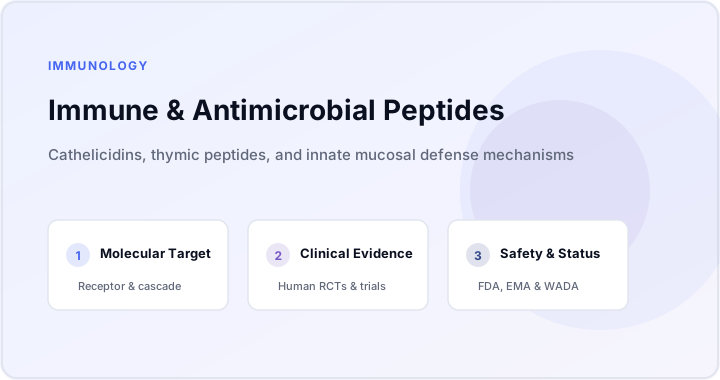
Field Summary & Status
Strong for Peptide Antibiotics; Early Human for ImmunomodulatorsInnate Host Defense & The Antimicrobial Arsenal
Innate immunity provides the first line of defense against invading pathogens across epithelial barriers of the skin, respiratory tract, and gastrointestinal mucosa. Central to this defense are Antimicrobial Peptides (AMPs), historically referred to as host defense peptides, which have been conserved across millions of years of eukaryotic evolution.
Unlike conventional antibiotics that inhibit specific bacterial enzymes (such as cell wall transpeptidases or DNA gyrases), cationic AMPs interact electrostatically with negatively charged bacterial membranes, inducing physical pore formation and rapid lysis. This biophysical mechanism makes it difficult for bacteria to evolve resistance.
Beyond direct antimicrobial killing, modern immunology recognizes that host defense peptides function as bifunctional immunomodulators: they neutralize bacterial endotoxins (LPS), recruit neutrophils and monocytes via chemotactic receptors, and downregulate destructive pro-inflammatory cytokines.
Biological Systems & Signaling Mechanisms
Some immune peptides damage microbial membranes, while others affect immune-cell signals. GPCRs are cell-surface proteins that relay some of these messages inside cells; the details below explain the proposed pathways.
Cationic Membrane Permeabilization
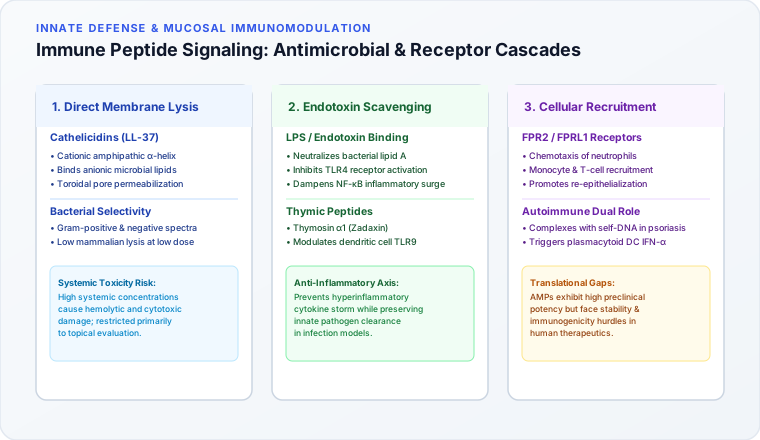
Amphipathic alpha-helices insert into negatively charged phosphatidylglycerol bacterial membranes, forming toroidal pores that collapse membrane potential.
Biophysical Assay
FPR2/ALX Chemotactic Recruitment
LL-37 binds formyl peptide receptor-like 1 (FPR2) to stimulate leukocyte migration and wound re-epithelialization.
Cell Signaling
NF-kappa-B Suppression (KPV)
In cell and mouse colitis models, PepT1-transported KPV inhibited NF-kappa-B and MAP kinase inflammatory signaling and reduced pro-inflammatory cytokine secretion.
In Vitro Inflammation
Peptide Classes & Molecular Targets
Host defense peptides divide into natural human defensins/cathelicidins, thymic hormones, and synthetic fragments.
Human Cathelicidins (LL-37)
Target: LL-37A 37-amino-acid amphipathic peptide cleaved from hCAP-18 with broad-spectrum antimicrobial and chemotactic activity.
Anti-Inflammatory Melanocortin Fragments
Target: KPV (Lys-Pro-Val)C-terminal tripeptides of alpha-MSH that retain NF-kB inhibitory properties without melanogenic pigmentation.
Thymic Peptide Hormones
Target: Thymosin Alpha-1 (Thymalfasin)Peptides isolated from thymus tissue that stimulate T-cell maturation and immune reconstitution.
Human Clinical Trials & Observational Data
Clinical trials evaluate host defense peptides in refractory ulcers, viral infections, and sepsis.
| Trial / Study | Identifier / Compound | Phase & Cohort | Status / Duration | Primary Findings |
|---|---|---|---|---|
| Topical LL-37 in Hard-to-Heal Venous Leg Ulcers (first-in-human) |
Topical LL-37 in Hard-to-Heal Venous Leg Ulcers (first-in-human)
WRR-2014
|
Randomized, double-blind, placebo-controlled
34 participants with hard-to-heal venous leg ulcers; 4-week treatment phase
|
Completed |
The two lower LL-37 concentrations showed higher healing rate constants than placebo (statistically significant for the lowest only); the highest concentration did not differ from placebo. No local or systemic safety concerns.
Published 2014
|
| ETASS: Efficacy of Thymosin Alpha1 for Severe Sepsis |
ETASS: Efficacy of Thymosin Alpha1 for Severe Sepsis
NCT00711620
|
Multicenter single-blind RCT
361 severe sepsis patients
|
Completed |
28-day all-cause mortality 26.0% with thymosin alpha-1 vs 35.0% with control; the difference was marginal (nonstratified P = 0.062; log-rank P = 0.049; RR 0.74, 95% CI 0.54-1.02).
Published 2013
|
Approved Medicines vs. Investigational Compounds
Clear distinction between regulatory-approved prescription medicines and experimental candidates undergoing laboratory or early clinical testing.
| Compound | Target / Mechanism | Regulatory Status | Indications / Focus | Sponsor / Developer |
|---|---|---|---|---|
| Colistin / Polymyxin B | Approved Biological Target | FDA/EMA Approved (1959) | Multi-Drug Resistant Gram-Negative Infections | Multiple Manufacturers |
| Thymalfasin (Zadaxin) | Approved Biological Target | FDA/EMA Approved (1990s) | Chronic Hepatitis B / Oncology Adjunct (Outside US) | SciClone Pharmaceuticals |
| LL-37 (Promore) | Topical wound re-epithelialization & AMP defense | Phase 2 Completed | Preclinical / Investigational | Promore Pharma |
| KPV Tripeptide | PepT1-mediated NF-kB suppression | Preclinical | Preclinical / Investigational | Academic Research |
Safety Considerations & Autoimmune Realities
Modulating innate immune pathways carries risks of hemolytic toxicity and autoimmune exacerbation.
Hemolytic & Systemic Cytotoxicity of AMPs
High / Systemic LimitHigh systemic concentrations of amphipathic antimicrobial peptides can disrupt human erythrocyte membranes, causing hemolysis and nephrotoxicity.
Autoimmune Paradox in Psoriasis
ModerateIn psoriasis, LL-37 forms complexes with self-DNA that activate plasmacytoid dendritic cells, triggering pathological interferon-alpha release.
Nephrotoxicity of Peptide Antibiotics
SeverePolymyxin and colistin carry acute tubular necrosis risks requiring careful therapeutic drug monitoring.
Unresolved Scientific Questions
Key mechanistic and translational questions currently under active scientific investigation.
Can synthetic AMPs be engineered to eliminate mammalian membrane toxicity?
Differentiating bacterial versus human eukaryotic membrane selectivity is the major medicinal chemistry hurdle in AMP design.
Why did the FDA decline to approve Thymosin Alpha-1 in the United States?
While approved in over 30 countries, U.S. FDA regulatory standards require larger domestic pivotal Phase 3 trials that sponsors did not fund.
Evolution of Research & Milestones
Historical scientific breakthroughs, isolation events, structural discoveries, and regulatory milestones.
Thymosin Alpha-1 Sequenced
Low and Goldstein isolate and sequence Thymosin Alpha-1 from calf thymus.
Human LL-37 Cloned
Gudmundsson and colleagues clone the human cathelicidin gene FALL-39.
First-in-Human LL-37 Ulcer Trial
A small randomized, placebo-controlled trial reports improved healing measures at the two lower topical LL-37 concentrations in hard-to-heal venous leg ulcers.
Scientific References
Primary scientific publications, randomized controlled trials, and clinical consensus papers referenced in this field overview.
-
Treatment with LL-37 is safe and effective in enhancing healing of hard-to-heal venous leg ulcers: a randomized, placebo-controlled clinical trial Wound Repair Regen · 2014
-
The efficacy of thymosin alpha 1 for severe sepsis (ETASS): a multicenter, single-blind, randomized and controlled trial Crit Care · 2013
Scientific & Educational Disclaimer
InsidePeptides.org provides scientific and educational analysis of peer-reviewed research for informational purposes only. This overview does not constitute medical advice, diagnosis, treatment, prescription, or clinical guidance. Incretin and metabolic peptide medicines require physician oversight, prescription authorization, and regular clinical monitoring. Never adjust, initiate, or discontinue prescribed treatments without direct consultation with a qualified medical specialist.