
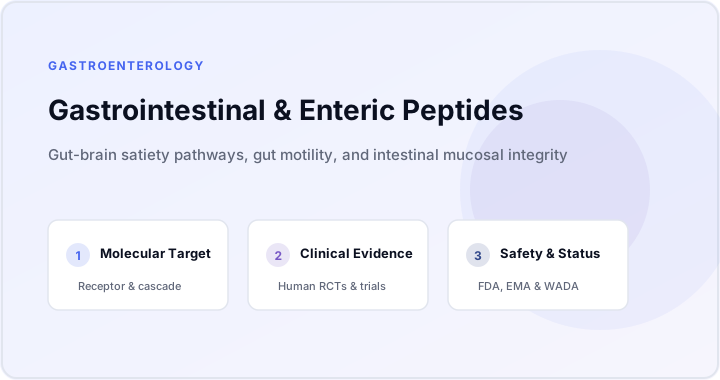
Field Summary & Status
Strong Evidence for Approved Drugs; Preclinical for Research CompoundsEnteroendocrine Signaling & Mucosal Homeostasis
The gastrointestinal tract is the largest endocrine organ in the human body, containing millions of specialized enteroendocrine cells scattered along the mucosal epithelium from the stomach to the rectum. These cells sample luminal contents and secrete dozens of distinct peptide hormones that coordinate digestive secretions, motor patterns, and satiety.
Pharmacological development in gastroenterology has focused on minimally absorbed, locally acting peptides. By acting exclusively on the luminal surface of enterocytes, drugs like linaclotide stimulate intestinal fluid secretion and reduce abdominal pain without systemic side effects.
Similarly, Glucagon-Like Peptide-2 (GLP-2) analogues have transformed the clinical management of short bowel syndrome by inducing mucosal crypt cell proliferation and villus growth, significantly reducing patient dependence on parenteral nutrition.
Biological Systems & Signaling Mechanisms
Luminal gastrointestinal peptides coordinate enterocyte fluid secretion, villus growth, and enteric nociception.
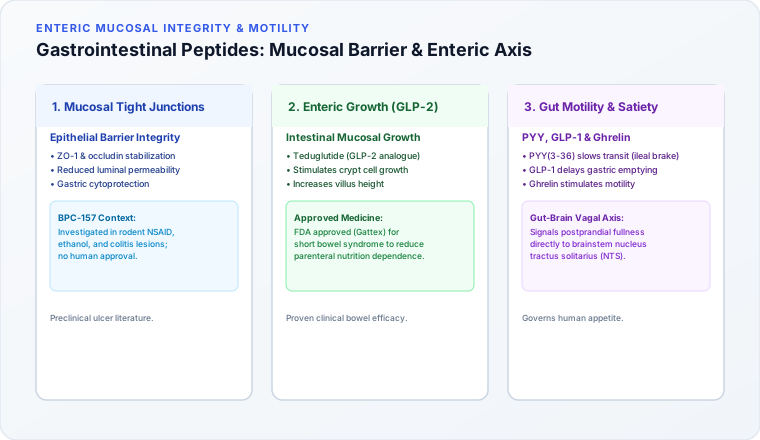
Guanylate Cyclase-C (GC-C) / cGMP Secretion
Activation of apical GC-C elevates intracellular cGMP, opening CFTR channels to stimulate chloride and bicarbonate secretion, accelerating transit.
Epithelial Physiology
Visceral Afferent Analgesia
Extracellular cGMP transported across the basolateral enterocyte membrane inhibits submucosal pain fibers, reducing visceral hypersensitivity.
Pain Neurobiology
GLP-2R Mucosal Crypt Hyperplasia
Agonism of GLP-2 receptors on subepithelial myofibroblasts stimulates local growth factor release (IGF-1), expanding intestinal absorptive capacity.
Mucosal Biology
Peptide Classes & Molecular Targets
GI peptides divide into guanylate cyclase agonists, trophic enterokines, and somatostatin analogues.
Guanylate Cyclase-C Agonists
Target: Linaclotide (Linzess), PlecanatideStable 14-to-16-amino-acid cyclic peptides with triple disulfide bonds that act locally in the intestinal lumen.
GLP-2 Intestinal Trophic Analogues
Target: Teduglutide (Gattex), ApraglutideDPP-4-resistant GLP-2 analogues that stimulate mucosal crypt cell proliferation and nutrient absorption.
Gastric Cytoprotective Fragments
Target: BPC-157Pentadecapeptides evaluated in preclinical animal models for gastric mucosal ulcer protection.
Human Clinical Trials & Observational Data
Large multicenter Phase 3 trials demonstrate bowel transit acceleration and mucosal regeneration.
| Trial / Study | Identifier / Compound | Phase & Cohort | Status / Duration | Primary Findings |
|---|---|---|---|---|
| Trial of Linaclotide in Patients With IBS-C (26-week Phase 3) |
Trial of Linaclotide in Patients With IBS-C (26-week Phase 3)
NCT00938717
|
Phase 3 Double-Blind RCT
804 IBS-C patients over 26 weeks
|
Completed |
33.7% of linaclotide-treated patients met the FDA composite responder end point vs 13.9% with placebo (P < 0.0001); abdominal pain and complete spontaneous bowel movement end points also improved.
Published 2012
|
| STEPS Phase 3 Teduglutide in Short Bowel Syndrome |
STEPS Phase 3 Teduglutide in Short Bowel Syndrome
NCT00798967
|
Phase 3 Double-Blind RCT
86 short bowel syndrome patients dependent on PN
|
Completed |
63% of teduglutide patients (27/43) vs 30% with placebo (13/43) achieved a >20% reduction in parenteral support volume at weeks 20 and 24.
Published 2012
|
Approved Medicines vs. Investigational Compounds
Clear distinction between regulatory-approved prescription medicines and experimental candidates undergoing laboratory or early clinical testing.
| Compound | Target / Mechanism | Regulatory Status | Indications / Focus | Sponsor / Developer |
|---|---|---|---|---|
| Linaclotide (Linzess) | Approved Biological Target | FDA/EMA Approved (2012) | IBS-C & Chronic Idiopathic Constipation | Ironwood / AbbVie |
| Teduglutide (Gattex) | Approved Biological Target | FDA/EMA Approved (2012) | Short Bowel Syndrome Dependent on Parenteral Nutrition | Takeda |
| Apraglutide | Long-acting synthetic GLP-2 analogue | Phase 3 Development | Preclinical / Investigational | VectivBio / Ironwood |
| BPC-157 | Gastric mucosal cytoprotection | Preclinical / Unapproved | Preclinical / Investigational | Academic Research |
Safety Realities & Clinical Tolerability
Locally acting GI peptides minimize systemic toxicity but can induce dose-dependent fluid alterations.
Dose-Dependent Diarrhea
Mild to ModerateSevere diarrhea is the primary adverse reaction for GC-C agonists, resulting from excessive luminal chloride secretion.
Colorectal Polyp Growth with GLP-2
Moderate / Surveillance MandatedBecause GLP-2 stimulates mucosal cell proliferation, patients require surveillance colonoscopy to monitor for pre-existing polyps.
Unresolved Scientific Questions
Key mechanistic and translational questions currently under active scientific investigation.
Can orally administered cytoprotective peptides heal inflammatory bowel disease?
While preclinical BPC-157 shows anti-inflammatory effects in murine DSS colitis, controlled human Phase 2 trials in Crohn's or ulcerative colitis have never been completed.
Does the gut-brain axis mediate central mood changes through GI peptide signaling?
Evaluating whether reducing peripheral gut nociception directly alters central anxiety and depressive symptoms.
Evolution of Research & Milestones
Historical scientific breakthroughs, isolation events, structural discoveries, and regulatory milestones.
GLP-2 Trophic Action Discovered
Drucker and colleagues discover that GLP-2 specifically induces intestinal crypt cell growth.
Linaclotide & Teduglutide Approvals
FDA approves both Linzess and Gattex in landmark year for GI peptide therapeutics.
Next-Gen Enterokines
Once-weekly GLP-2 analogues (apraglutide) enter registrational review.
Scientific References
Primary scientific publications, randomized controlled trials, and clinical consensus papers referenced in this field overview.
-
Linaclotide for irritable bowel syndrome with constipation: a 26-week, randomized, double-blind, placebo-controlled trial to evaluate efficacy and safety Am J Gastroenterol · 2012
-
Teduglutide reduces need for parenteral support among patients with short bowel syndrome with intestinal failure Gastroenterology · 2012
-
Induction of intestinal epithelial proliferation by glucagon-like peptide 2 Proc Natl Acad Sci U S A · 1996
Scientific & Educational Disclaimer
InsidePeptides.org provides scientific and educational analysis of peer-reviewed research for informational purposes only. This overview does not constitute medical advice, diagnosis, treatment, prescription, or clinical guidance. Incretin and metabolic peptide medicines require physician oversight, prescription authorization, and regular clinical monitoring. Never adjust, initiate, or discontinue prescribed treatments without direct consultation with a qualified medical specialist.