
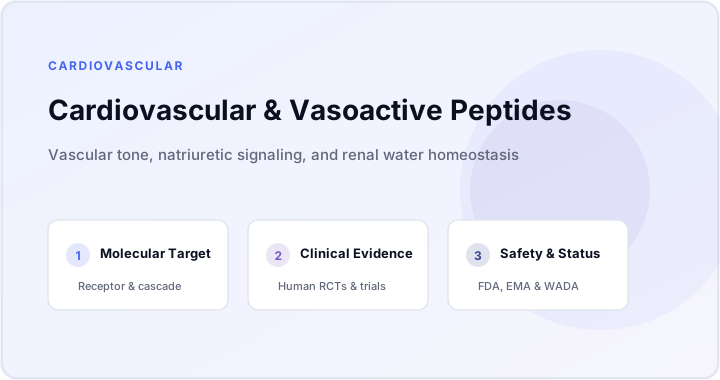
Field Summary & Status
Strong EvidenceHemodynamic Tone & Neurohumoral Regulation
Cardiovascular physiology is governed by opposing neurohumoral peptide networks that maintain arterial blood pressure and intravascular volume. The vasoconstrictive arm is driven by the Renin-Angiotensin-Aldosterone System (RAAS) and arginine vasopressin, which promote arteriolar constriction and renal water retention.
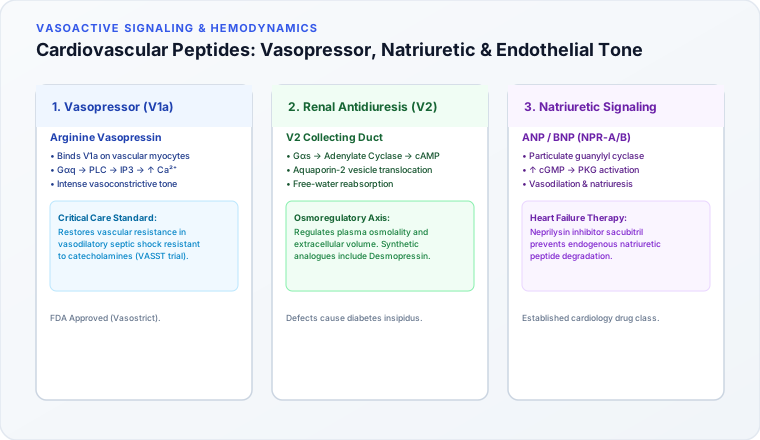
Counterbalancing these hypertensive signals is the cardiac natriuretic peptide system, comprising Atrial Natriuretic Peptide (ANP) and B-type Natriuretic Peptide (BNP). Released by atrial and ventricular myocytes in response to wall stretch and volume overload, natriuretic peptides bind particulate guanylyl cyclase receptors to trigger vasodilation, natriuresis, and diuresis.
Clinical pharmacology in this field has evolved from acute recombinant peptide infusions to dual neprilysin inhibition (sacubitril), which prevents the enzymatic degradation of endogenous cardioprotective peptides, establishing modern heart failure guideline standards.
Biological Systems & Signaling Mechanisms
Cardiovascular peptides regulate smooth muscle relaxation, renal sodium filtration, and inotropic contractility.
Natriuretic Receptor Particulate Guanylyl Cyclase (cGMP)
ANP and BNP bind NPR-A, stimulating intracellular cGMP synthesis, activating Protein Kinase G (PKG), and promoting smooth muscle relaxation.
Hemodynamic Signaling
Angiotensin AT1 Receptor Vasoconstriction
Angiotensin II binds Gq-coupled AT1 receptors, mobilizing IP3 and calcium to cause potent systemic vasoconstriction and aldosterone release.
Vascular Physiology
V1a Vascular Resistance Elevation
Vasopressin activates V1a receptors on vascular smooth muscle to restore systemic vascular resistance during vasoplegic shock.
Critical Care
Peptide Classes & Molecular Targets
Cardiovascular peptide therapeutics span natriuretic agonists, vasoconstrictors, and degradation inhibitors.
Natriuretic Peptide Agonists
Target: Nesiritide (rhBNP), CenderitideRecombinant human natriuretic peptides engineered to reduce cardiac filling pressures.
Synthetic Vasoconstrictor Peptides
Target: Angiotensin II (Giapreza), Vasopressin (Vasostrict)Peptides indicated for refractory vasodilatory and septic shock.
Neprilysin-Protected Cardioprotective Systems
Target: Sacubitril (in Entresto ARNI combination)Inhibiting neutral endopeptidase (neprilysin) to extend endogenous ANP, BNP, and bradykinin half-lives.
Human Clinical Trials & Observational Data
Pivotal randomized trials evaluate hemodynamic restoration in intensive care and heart failure survival.
| Trial / Study | Identifier / Compound | Phase & Cohort | Status / Duration | Primary Findings |
|---|---|---|---|---|
| PARADIGM-HF Landmark Heart Failure Trial |
PARADIGM-HF Landmark Heart Failure Trial
NCT01035255
|
Phase 3 Double-Blind RCT
8442 heart failure patients with reduced ejection fraction
|
Completed |
20% reduction in cardiovascular death or heart failure hospitalization with neprilysin inhibition vs enalapril.
Published 2014
|
| ATHOS-3: Phase 3 Study of LJPC-501 (Angiotensin II) in Catecholamine-Resistant Hypotension |
ATHOS-3: Phase 3 Study of LJPC-501 (Angiotensin II) in Catecholamine-Resistant Hypotension
NCT02338843
|
Phase 3 Double-Blind RCT
321 treated patients with catecholamine-resistant vasodilatory shock (344 randomized)
|
Completed |
Mean arterial pressure response at hour 3 in 69.9% with angiotensin II vs 23.4% with placebo (P<0.001); 28-day mortality did not differ significantly.
Published 2017
|
Approved Medicines vs. Investigational Compounds
Clear distinction between regulatory-approved prescription medicines and experimental candidates undergoing laboratory or early clinical testing.
| Compound | Target / Mechanism | Regulatory Status | Indications / Focus | Sponsor / Developer |
|---|---|---|---|---|
| Angiotensin II (Giapreza) | Approved Biological Target | FDA/EMA Approved (2017) | Vasodilatory Septic Shock | La Jolla Pharmaceutical / Innoviva |
| Vasopressin (Vasostrict) | Approved Biological Target | FDA/EMA Approved (2014) | Vasodilatory Shock Refractory to Norepinephrine | Par Sterile Products |
| Sacubitril / Valsartan (Entresto) | Approved Biological Target | FDA/EMA Approved (2015) | Heart Failure with Reduced & Preserved EF | Novartis |
| Cenderitide (CD-NP) | Dual NPR-A / NPR-B designer natriuretic peptide | Phase 2 Clinical Development | Preclinical / Investigational | Mayo Clinic / Biotech |
Safety Realities & Hemodynamic Hazards
Vasoactive peptide interventions carry immediate risks of profound hypotension, severe ischemia, or fluid overload.
Excessive Peripheral Vasoconstriction
Severe / ICU MonitoredPotent vasoconstrictors (angiotensin II, vasopressin) can cause digital, mesenteric, or myocardial ischemia if infused excessively.
Angioedema Risk with Neprilysin Inhibition
Severe / Life-ThreateningBecause neprilysin degrades bradykinin, combining neprilysin inhibitors with ACE inhibitors causes severe angioedema (mandating 36h washout).
Unresolved Scientific Questions
Key mechanistic and translational questions currently under active scientific investigation.
Can designer natriuretic peptides provide renal protection without inducing systemic hypotension?
Engineering peptides that selectively activate renal NPR-A receptors while sparing peripheral resistance vessels.
What are the long-term microvascular outcomes of GLP-1 cardiovascular protection?
Elucidating the exact endothelial versus autonomic mechanisms driving MACE reductions in the LEADER and SELECT landmark trials.
Evolution of Research & Milestones
Historical scientific breakthroughs, isolation events, structural discoveries, and regulatory milestones.
Atrial Natriuretic Factor Discovered
de Bold and colleagues discover that atrial extract injections induce rapid natriuresis.
PARADIGM-HF Published
Neprilysin peptide-protection establishes historic heart failure mortality benefit.
Giapreza FDA Approval
Synthetic human angiotensin II approved for refractory vasodilatory shock.
Scientific References
Primary scientific publications, randomized controlled trials, and clinical consensus papers referenced in this field overview.
-
A rapid and potent natriuretic response to intravenous injection of atrial myocardial extract in rats Life Sci · 1981
Scientific & Educational Disclaimer
InsidePeptides.org provides scientific and educational analysis of peer-reviewed research for informational purposes only. This overview does not constitute medical advice, diagnosis, treatment, prescription, or clinical guidance. Incretin and metabolic peptide medicines require physician oversight, prescription authorization, and regular clinical monitoring. Never adjust, initiate, or discontinue prescribed treatments without direct consultation with a qualified medical specialist.